October 12, 2026
Protecting Your Lawn and Property During Tree Work
What tree work actually does to a lawn, how ruts and compaction are avoided, what to mark before the crew arrives, and what is honestly unavoidable.
By John Ritz Miller, Jr. — ISA Certified Arborist MA-7241A, Rock Creek Tree, Turf & Landscape LLC
Published October 12, 2026
Most people call about the tree. The question that comes second, usually about halfway through the estimate, is some version of: what is this going to do to my yard? It is a fair question and it deserves a straight answer, because a removal planned without thinking about the ground can leave you with a solved tree problem and a lawn that takes a full season to come back.
Here is what actually causes the damage, what we do to avoid it, what you can do before the crew arrives, and — honestly — what is not avoidable.
The damage comes from weight, not from saws
Chainsaws do not hurt lawns. Weight does, in three ways.
Ruts
A wheeled machine puts its whole load on a small contact patch. On soft ground that patch sinks, and once it sinks it tears. A rut is not a cosmetic problem — the soil has been pushed sideways, so putting it right is real work rather than a rake and a handful of seed.
Compaction
The quieter one, and the one people notice months later. Driving over a lawn squeezes the air out of the soil, and roots need that air as much as they need water. Compacted ground sheds water instead of absorbing it, grass thins across the compacted strip, and any tree you are keeping nearby is affected too. Root injury from compaction is one of the things that puts a mature tree into decline years afterward, long after anyone connects the two events.
Impact
A section of trunk dropped from height hits the ground hard enough to leave a crater. This is the most avoidable of the three, and it is the reason the method matters more than the machine.
What we do about it
Most of this is settled before anyone picks up a saw, during the site assessment. The short version: keep weight off the lawn entirely where we can, and spread it where we cannot.
Work from the hard surfaces
The driveway and the street carry weight without complaint. A large share of the planning on any removal is working out whether the truck, the crane or the loader can reach from a hard surface, because if it can, the lawn question mostly goes away. Sometimes the answer runs through a neighbor's driveway, which means a conversation with the neighbor before the day rather than on it.
Matting where we cannot
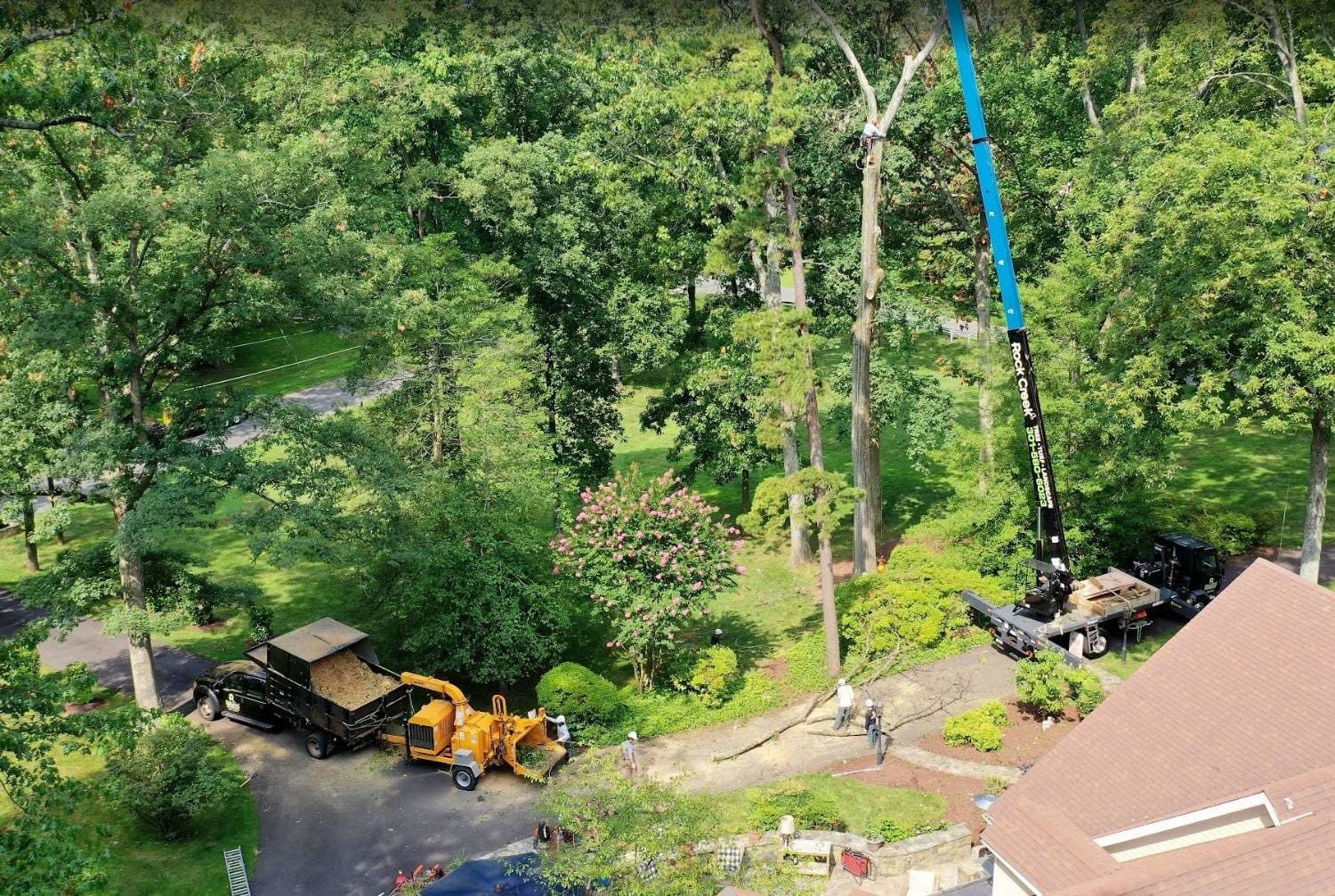
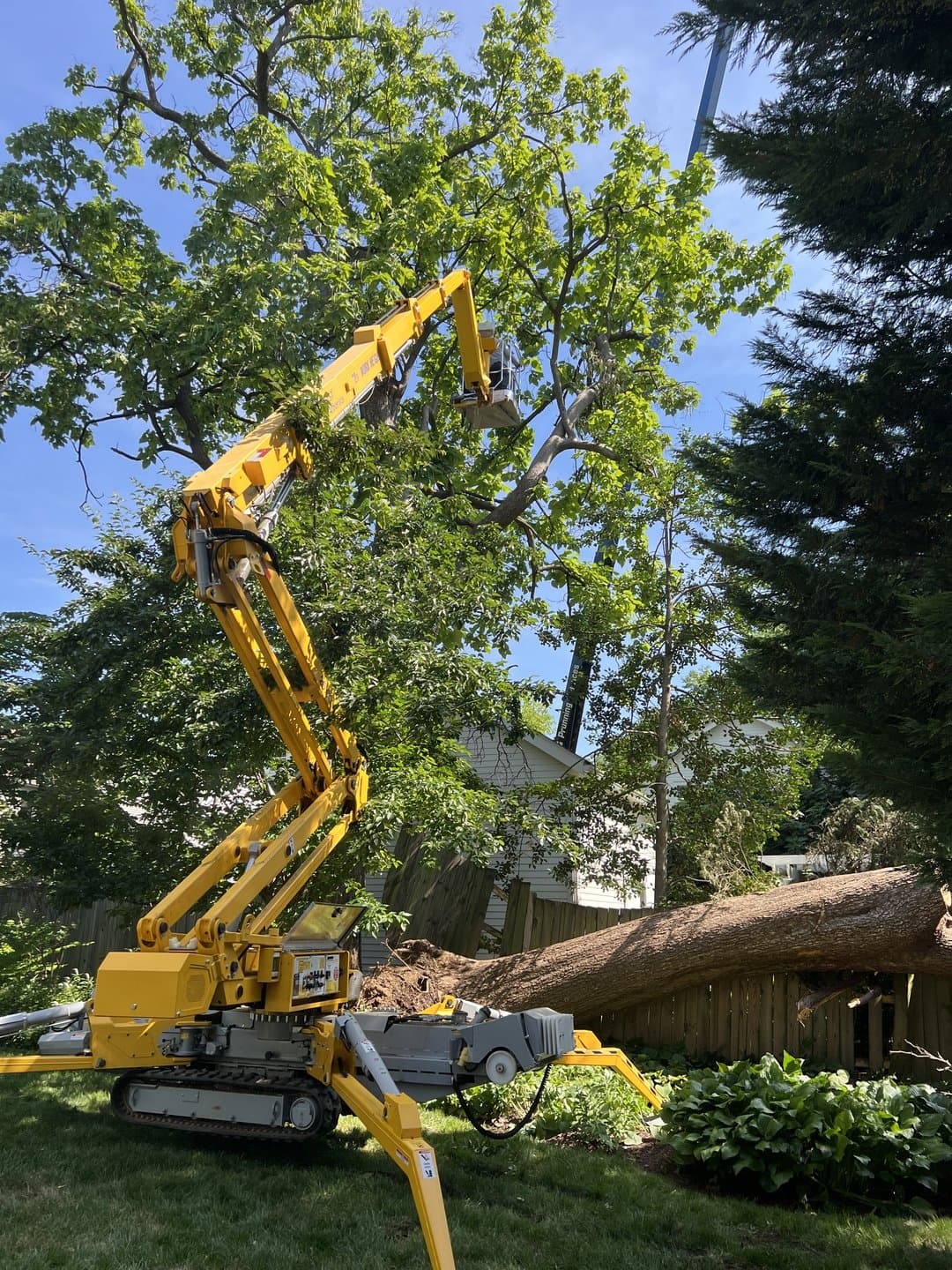
Plywood matting goes under outriggers and along machine travel routes so the load spreads across a wide area instead of four small feet. Tracked machines spread weight better than wheels for the same reason — a track carries the same tonnage over several square feet of ground that a tire carries over a few square inches.
Lift the wood out instead of dropping it
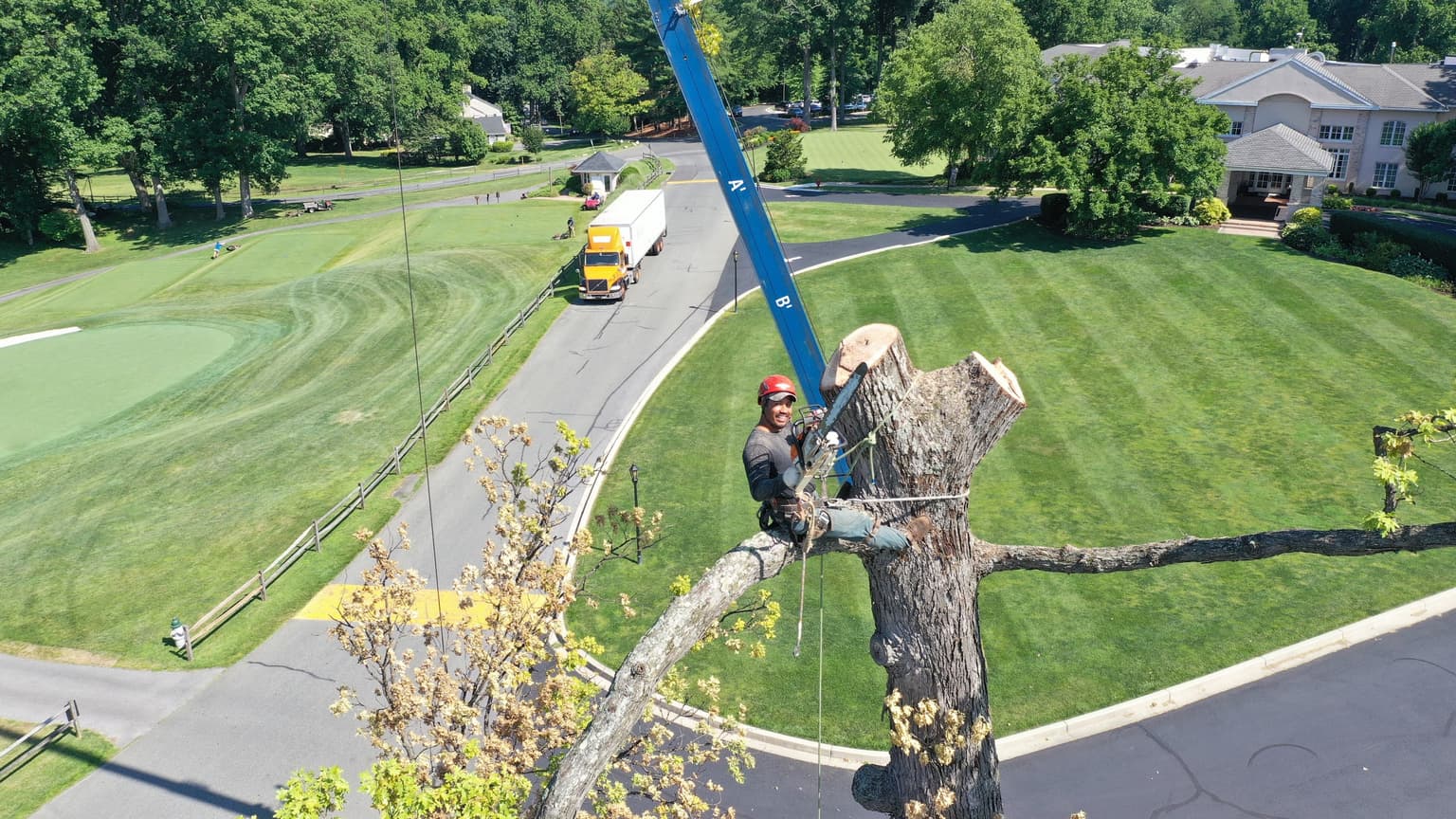
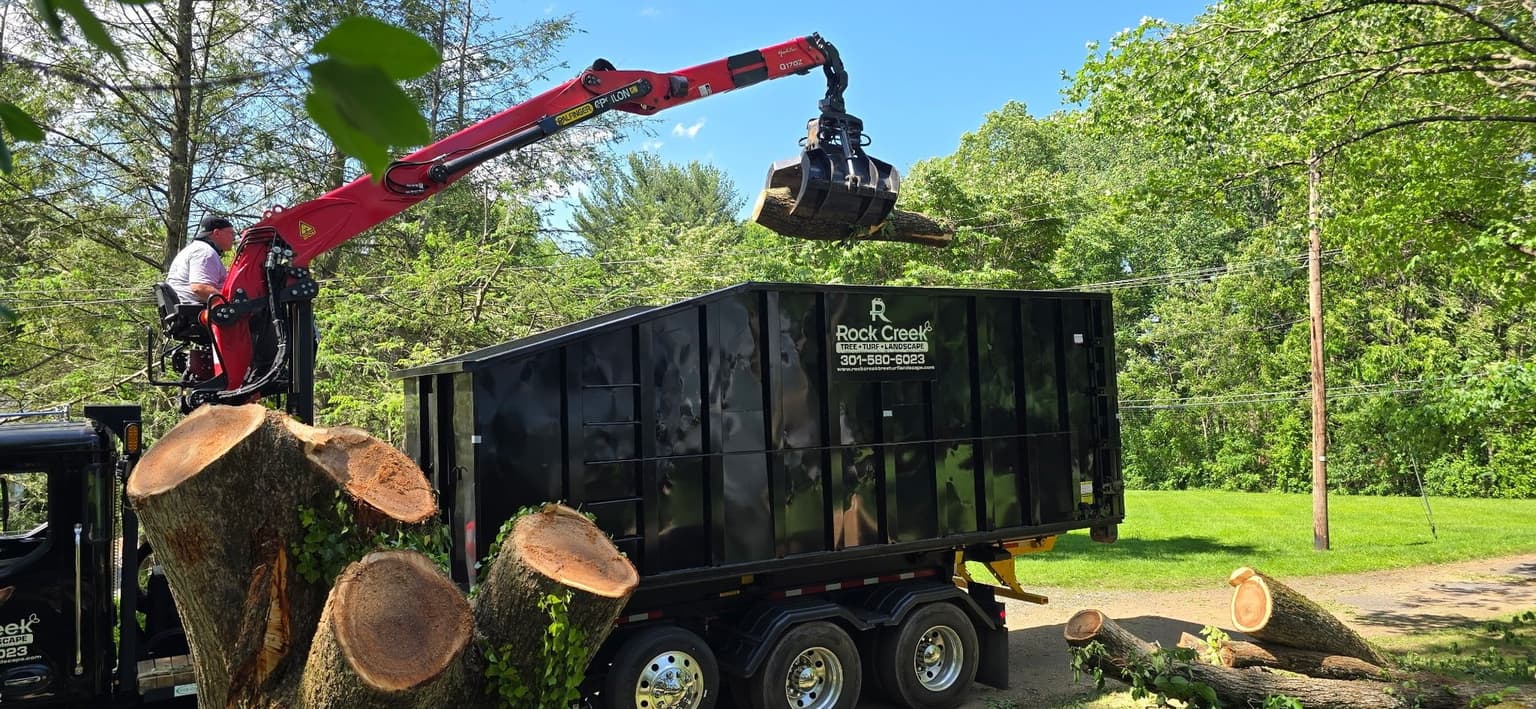
This is what a crane is really for on a residential lot. It is not only about trees too dangerous to climb. A perfectly sound tree standing over a lawn you care about, a pool, a patio or a septic field goes to the crane because the pieces can be lifted away and set down somewhere that does not matter, instead of dropped on somewhere that does.
Move the job rather than fight the ground
Saturated ground is the real limit. Past a certain point no amount of matting makes it sensible to put a machine on a lawn, and it is better to move the job by a day than to churn up a yard that will take a season to recover. If we call to reschedule after a week of rain, that is why — not because something more urgent came in.
What is buried matters more than what is on top
Grass grows back. A leach field does not, not cheaply.
Before work near a septic system we ask the homeowner to identify where the tank and the field actually are. Not approximately. A drain field is invisible from the surface, it does not tolerate point loads, and replacing one costs a multiple of the tree work. We do not begin work near a septic system without that information.
On a wooded Rockville property this autumn the deciding factor on a dead oak was not the tree at all. The septic tank and leach field sat around its base, which meant no heavy wood could be dropped anywhere near it — so the crew worked from a crane and lifted every section clear of the ground above the system. The full write-up is worth reading if you are on well and septic.
The same logic covers everything else under the surface: irrigation lines and heads, invisible fencing, low-voltage lighting cable, well heads, and any shallow utility run. Stump grinders in particular cut through all of those as readily as they cut wood. Mark them before we arrive and none of it is a problem.
What you can do before the day
Five things, none of which take long, and all of which change what we are able to protect:
- Mark what is buried — irrigation heads and lines, invisible fence, lighting cable, the septic tank and field, the well.
- Say where the soft ground is. You know which part of the yard holds water for three days after a storm. We do not.
- Move vehicles, trailers, furniture, planters and anything fragile well clear of the work area and of the route to it.
- Point out what you care about. A specimen shrub, a new bed, a patch of lawn you reseeded last month — told beforehand, we plan around it; found afterward, we cannot.
- Decide in advance what happens to the wood and the chips. Changing your mind on the day usually means another trip.
What is not avoidable, honestly
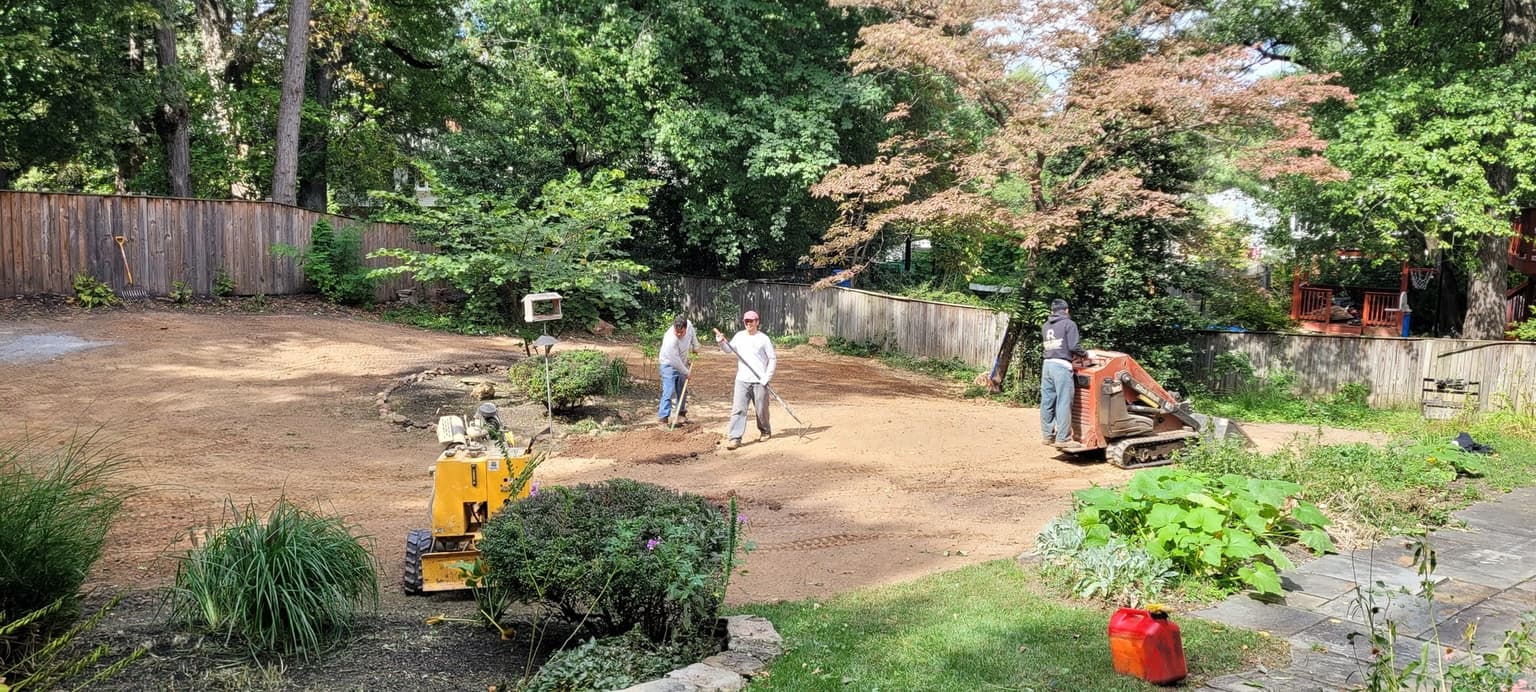
Nobody can put a loaded truck or a tracked lift across a lawn and leave no trace at all. On a dry day with matting down, what you are usually left with is flattened grass that stands back up inside a week or two. On a wet one it can be a visible track that needs seed. Anyone promising a mature removal with zero impact on the ground is either working entirely from the street or not telling you the whole story.
Stump grinding leaves its own mark by design. The stump and its major surface roots are reduced to chips several inches below grade, and that produces a surprising volume of material. You can leave the chips as backfill — they settle over time, so the spot will dip — or have them hauled off and the hole filled with soil so it is level and ready to seed. That is worth deciding before the grinder arrives rather than after.
Where ground does need putting right afterward, that is not a separate trade for us. Turf and landscape work is the other half of the name, so repair, seeding or a replanting can be part of the same conversation rather than a second company and a second visit.
Four questions worth asking any tree company
Whoever you end up hiring, the answers to these tell you how much thought has gone into the ground rather than just the tree:
- Where will the equipment set up, and what will it be standing on?
- Will you mat the travel route, and is that in the price you have quoted me?
- What happens if the ground is too wet on the day — do you work anyway?
- Have you asked me what is buried, and who is responsible if something gets cut?
A company that has not asked about your septic field before quoting a removal near one has not finished looking at the job.
If you have a tree that needs to come down and a yard you would rather keep, that is a conversation to have at the estimate, not afterward. An arborist walks the property and looks at access and ground conditions as carefully as at the tree, and tells you what the method will be and why.
Frequently asked questions
- Will your equipment damage my lawn?
- We plan for it. Plywood matting under outriggers and along travel paths spreads the load so machines do not sink in or leave ruts, and tracked equipment spreads weight better than wheels. Saturated ground is the real limit — past a point it is better to move the job by a day than to churn up the yard.
- Can a tree be removed without any equipment on the grass?
- Often, yes. Where the driveway or the street gives the reach and the footing, the machinery never leaves the hard surface and the lawn is untouched. Whether that is possible depends on where the tree stands, what it weighs and what the approach is like, which is what the site visit establishes.
- Why do you need to know where my septic tank and drain field are?
- Because a drain field is invisible from the surface, does not tolerate point loads, and costs a great deal more to replace than the tree work costs to carry out. Knowing where those components sit is what lets us plan equipment access and decide where wood can be set down. We do not begin work near a septic system without that information.
- What will the stump area look like afterward?
- Ground several inches below grade and filled with chips, which make usable mulch but settle over time, so the spot will dip. The alternative is having the chips hauled away and the hole backfilled with soil, level and ready to seed or plant. Decide which you want before the grinder arrives.
- It rained all week and my job is booked for tomorrow. What happens?
- We will look at the ground and tell you honestly. If the lawn will not take the weight, rescheduling by a day or two costs nothing and saves a season of recovery. That call is made case by case — a job reached entirely from the driveway may be unaffected by the same rain that rules out a job in a back yard.