October 30, 2026
Crane-Assisted Red Maple Removal on Ogden Road in Bethesda
A mature red maple on Ogden Road in Bethesda had begun to move at the roots and break a deck railing. How a 22-ton rear-mount crane took it down over the house.
By John Ritz Miller, Jr. — ISA Certified Arborist MA-7241A, Rock Creek Tree, Turf & Landscape LLC
Published October 30, 2026
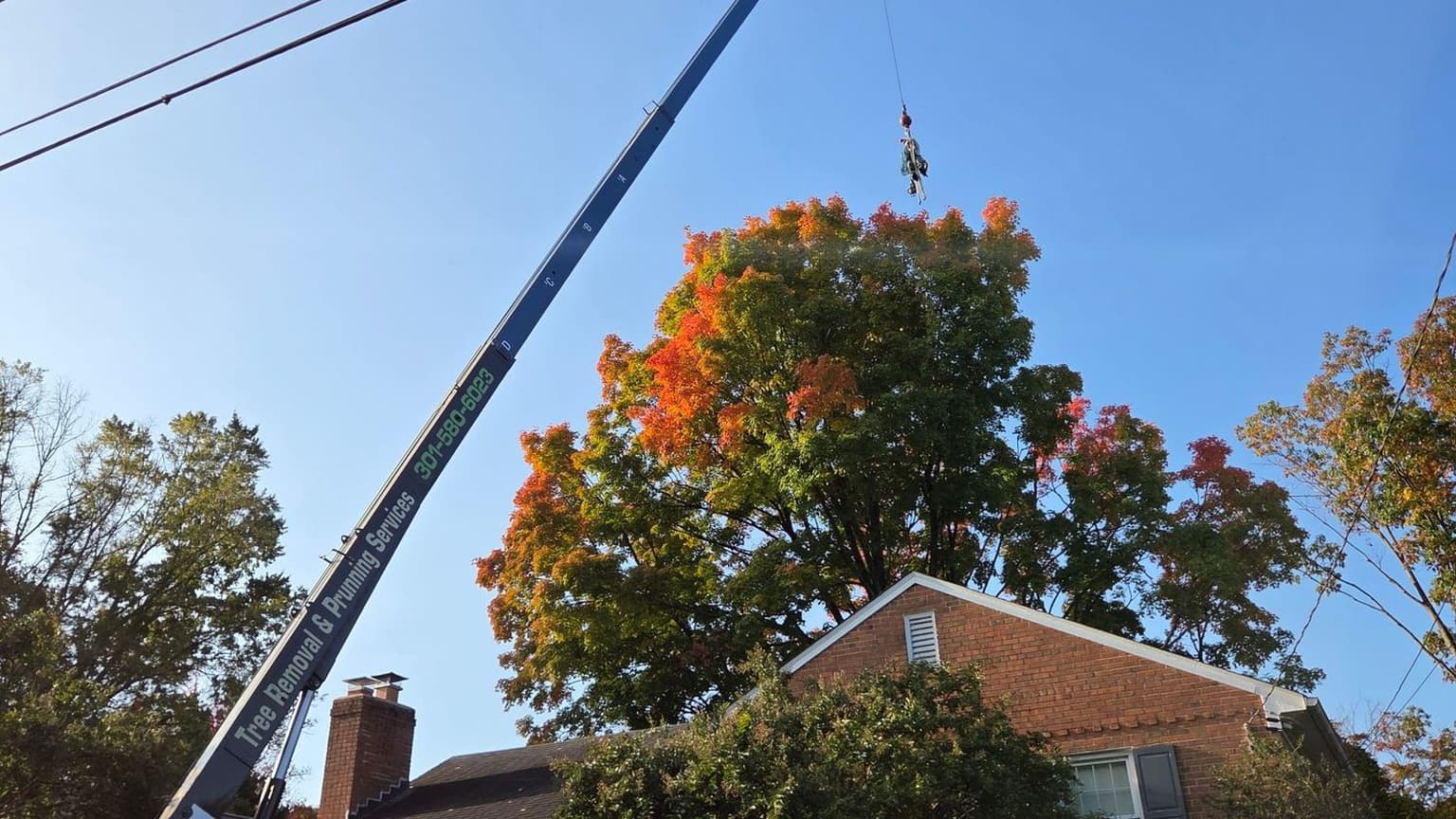
For years, a mature red maple had provided substantial shade at a home on Ogden Road in Bethesda. The homeowner valued the tree and had invested in its care, and our team had worked to preserve it through pruning and ongoing inspections.
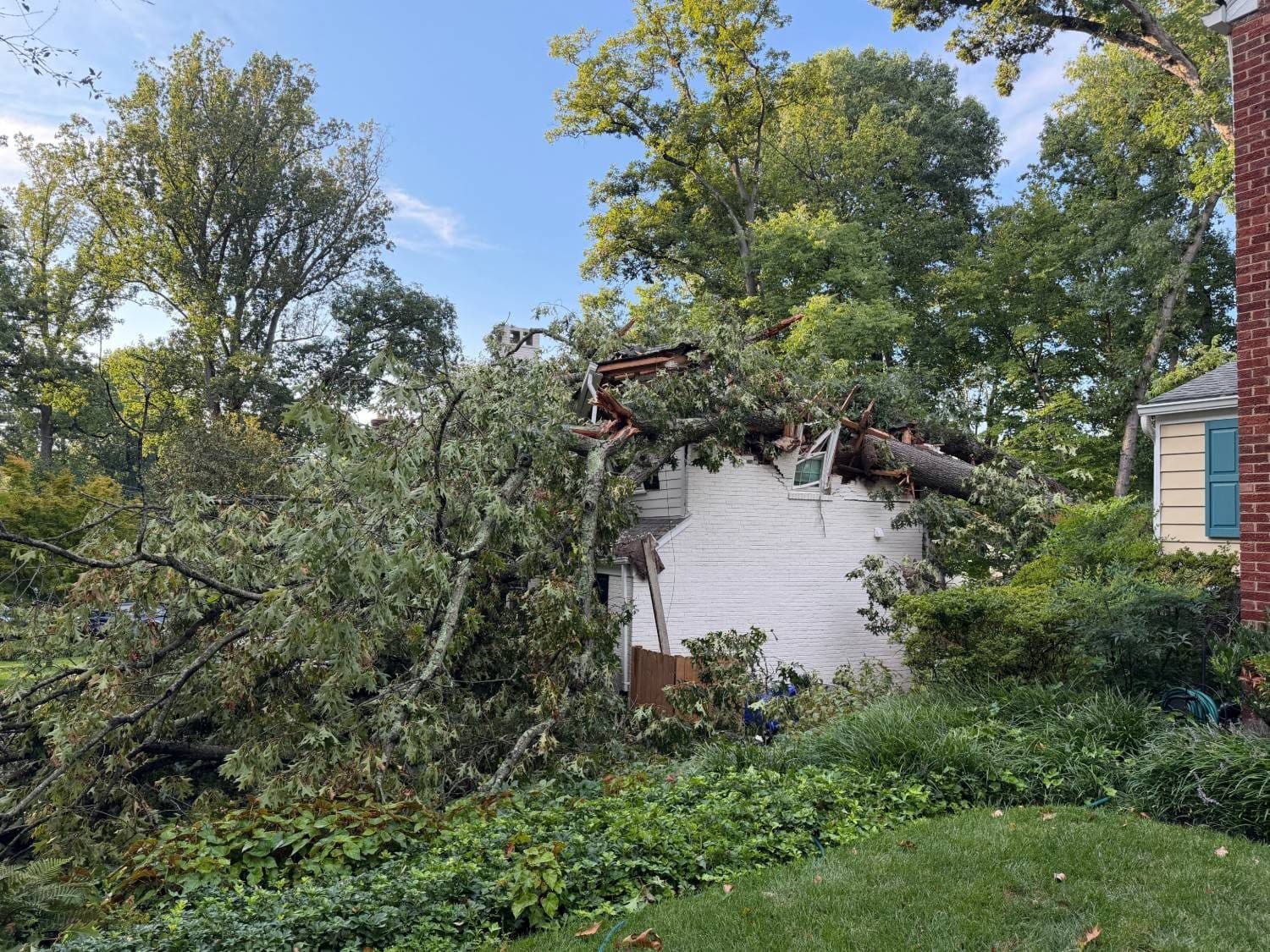
During this year’s annual inspection, however, we found a significant change. There was visible ground movement around the tree, and it was pressing against the deck hard enough to break part of the railing. With the tree leaning over the home, the concern was that further movement could cause much more extensive damage.
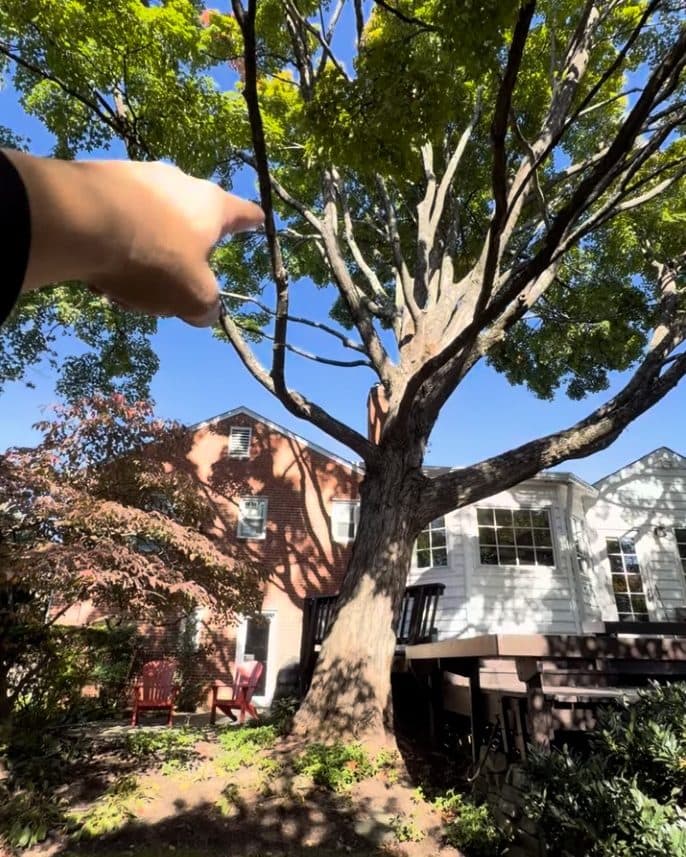
This is the tree before the work began. The deck is built right up against the trunk, which is where the railing had been pushed apart, and the canopy spreads over the roof behind it.
Removing a tree like this is a difficult decision, particularly after spending years caring for it. A maple that still looks healthy from the street is hard to give up on. But movement at the base is a different kind of problem from a dead limb or a cavity: the question is no longer what is wrong with the tree, but whether the ground is still holding it. Given the movement and the damage already occurring, we recommended being proactive and removing the red maple.
Planning the removal around the house and deck
The tree’s location made the removal challenging from the start. The deck partially surrounded the trunk, leaving almost no working space at the base, while the canopy extended over the home. There was no way to fell it, and very little room to lower pieces on ropes. We needed a crane to lift sections out of that confined area.
Getting the crane into position required just as much consideration. High-voltage overhead lines ran along the customer’s side of the street. A brand-new walkway, large established landscape features, and limited space between the plantings and the house further restricted the available setup area.
For this project, we brought in our 22-ton rear-mount Manitex boom truck, which we had custom-built for properties where substantial reach is needed but staging space is limited.
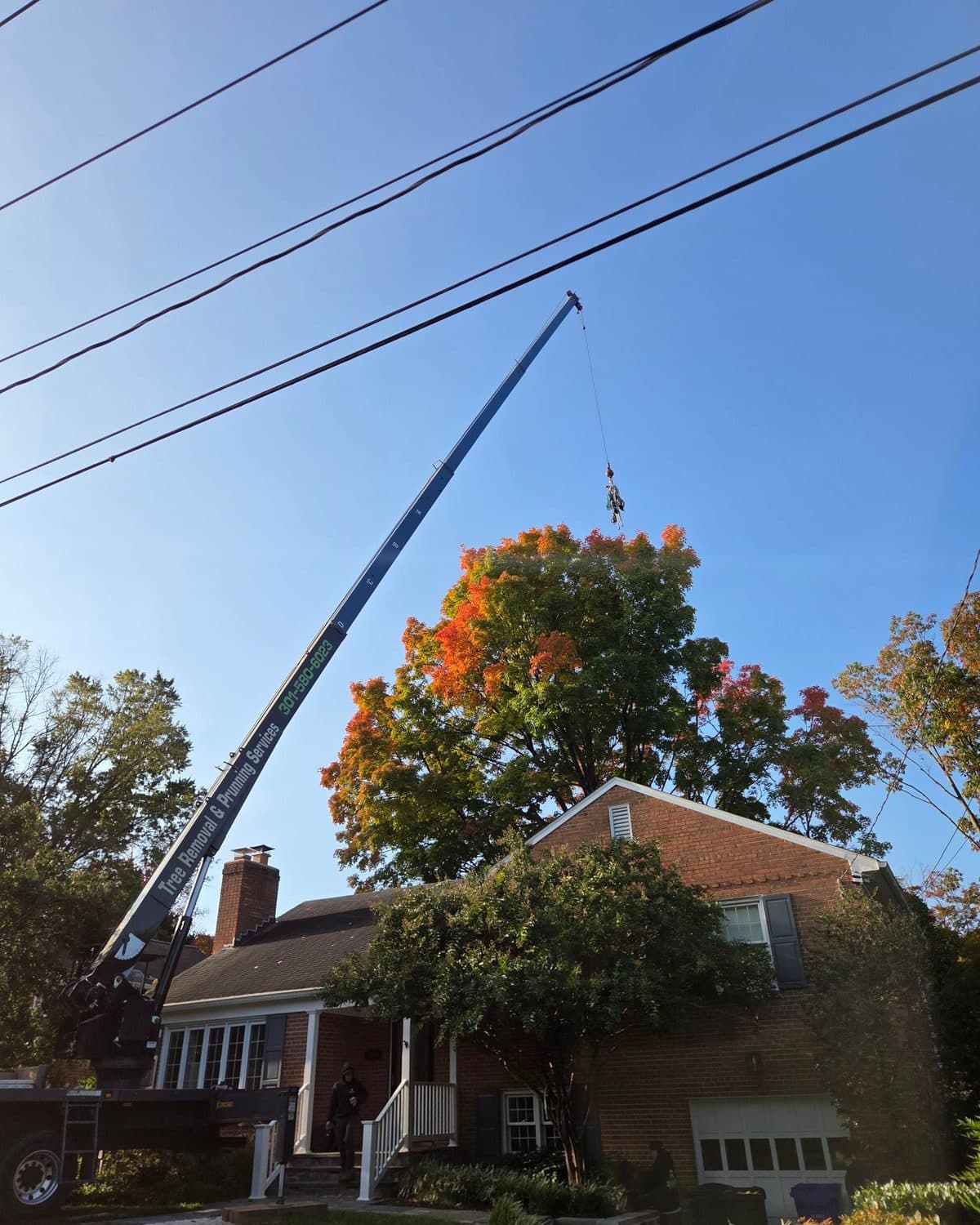
This is a good example of why we own and operate multiple cranes of varying sizes. Extra boom length does little good if the truck cannot get close enough to the work. Having several options allows us to choose a crane with the reach we need and a footprint that fits the property.
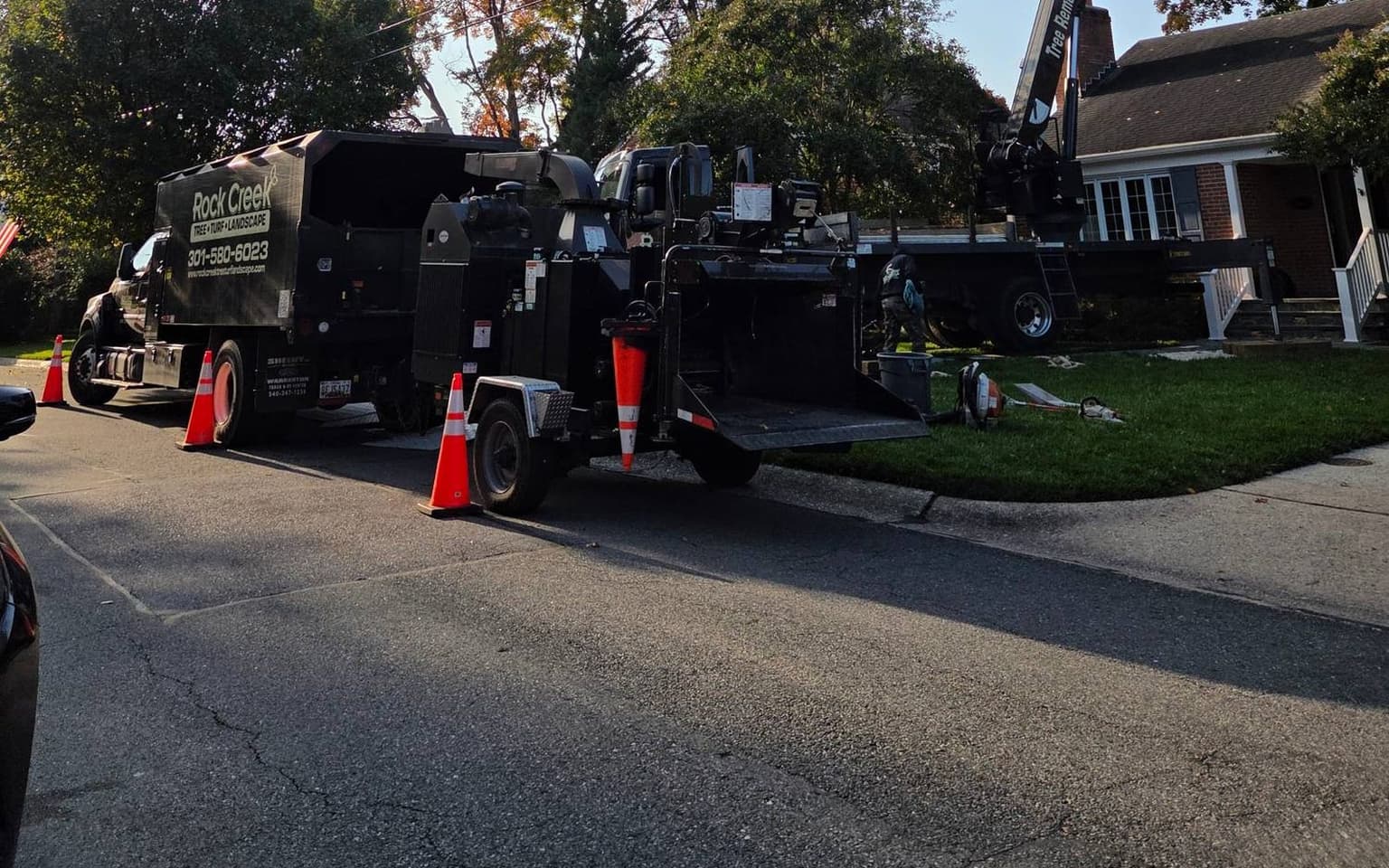
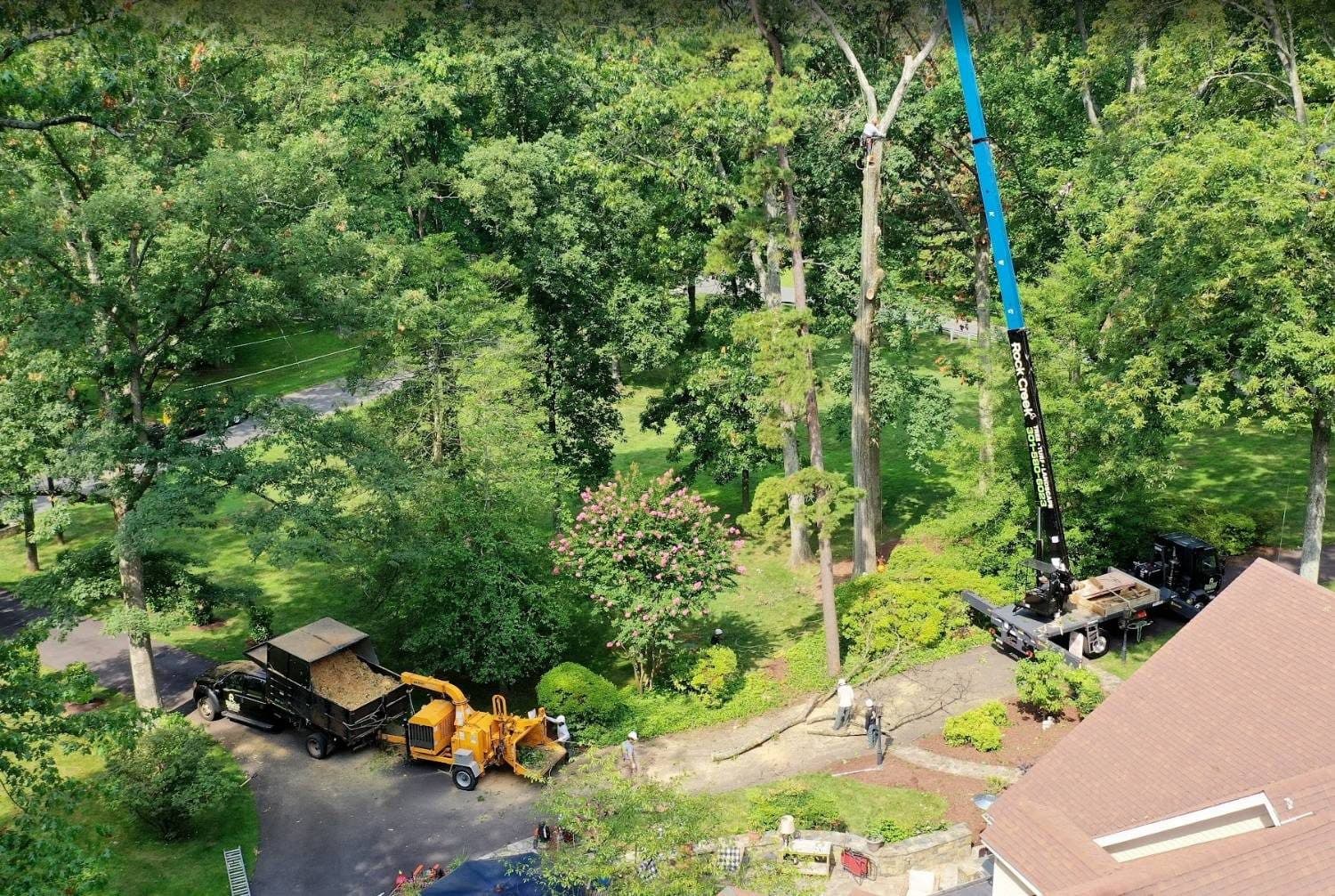
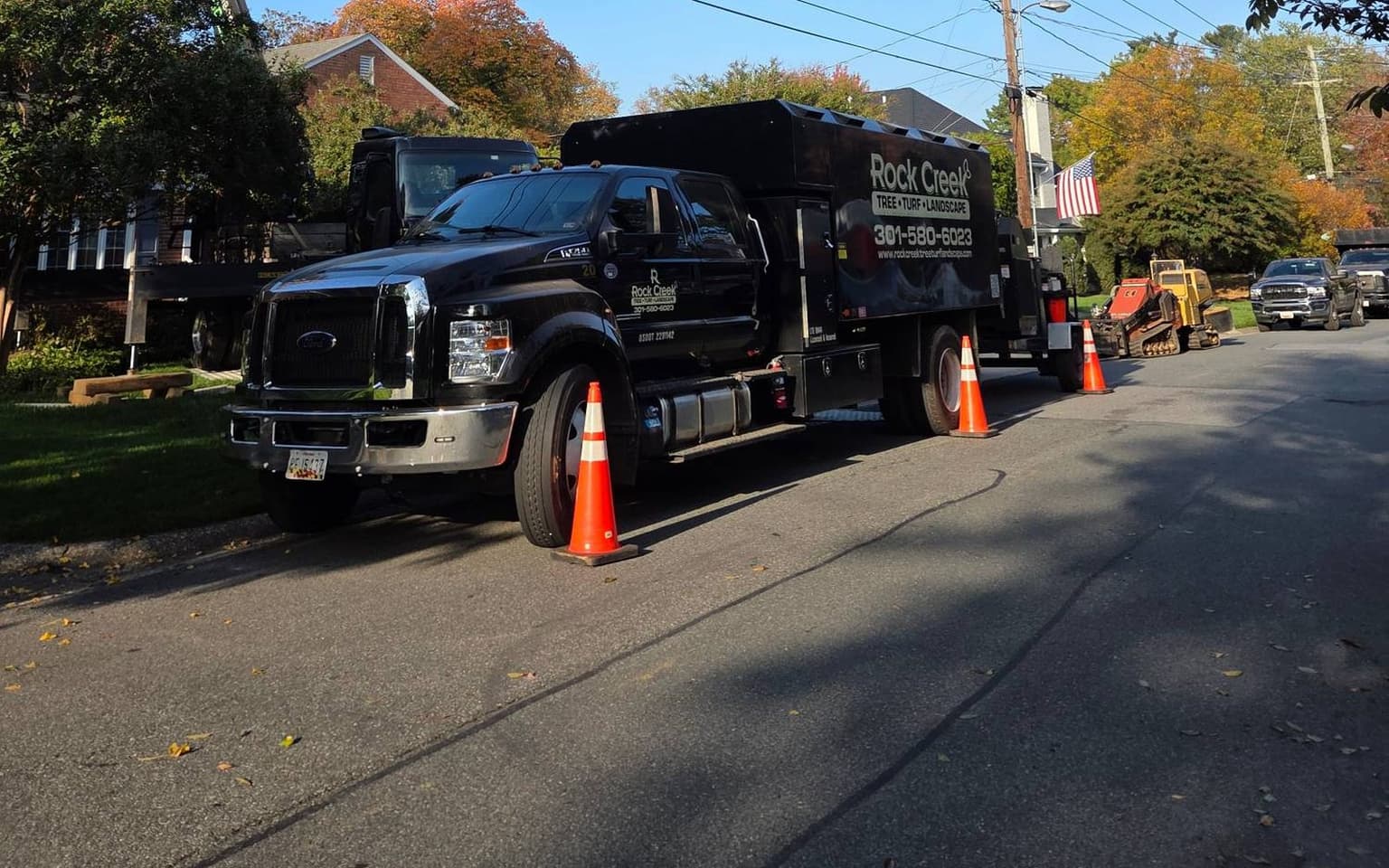
The crane set up in front of the house with the boom reaching over the roof, and the chipper and chip truck were coned off along the street beside it. Everything the job needed had to fit on that one short stretch of road.
Smaller lifts and steady coordination
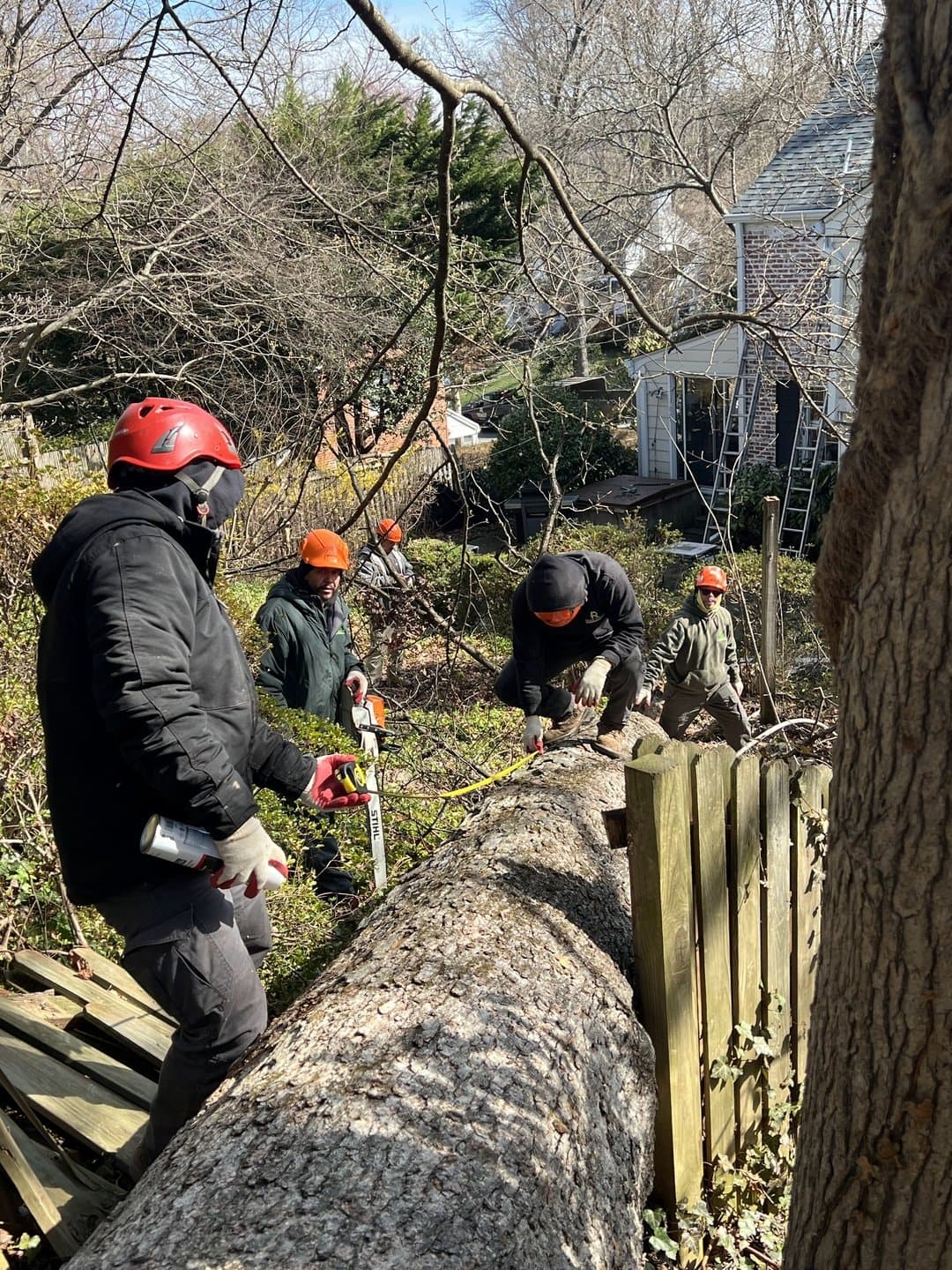
A six-man crew handled the tree removal: two tree climbers, one crane operator, and three groundsmen. One climber focused on cutting while the other handled the rigging.
The limited space affected more than access to the tree. There was also very little room to lower branches and trunk sections for the ground crew to process. Each crane lift had to fit the available landing area and arrive in a size the crew could manage efficiently.
That meant taking smaller sections throughout the removal. The climbers carefully rigged each piece, coordinating with the crane operator as it was cut, lifted clear, and lowered into the landing area. The ground crew then processed and cleared the material before the next section came down.
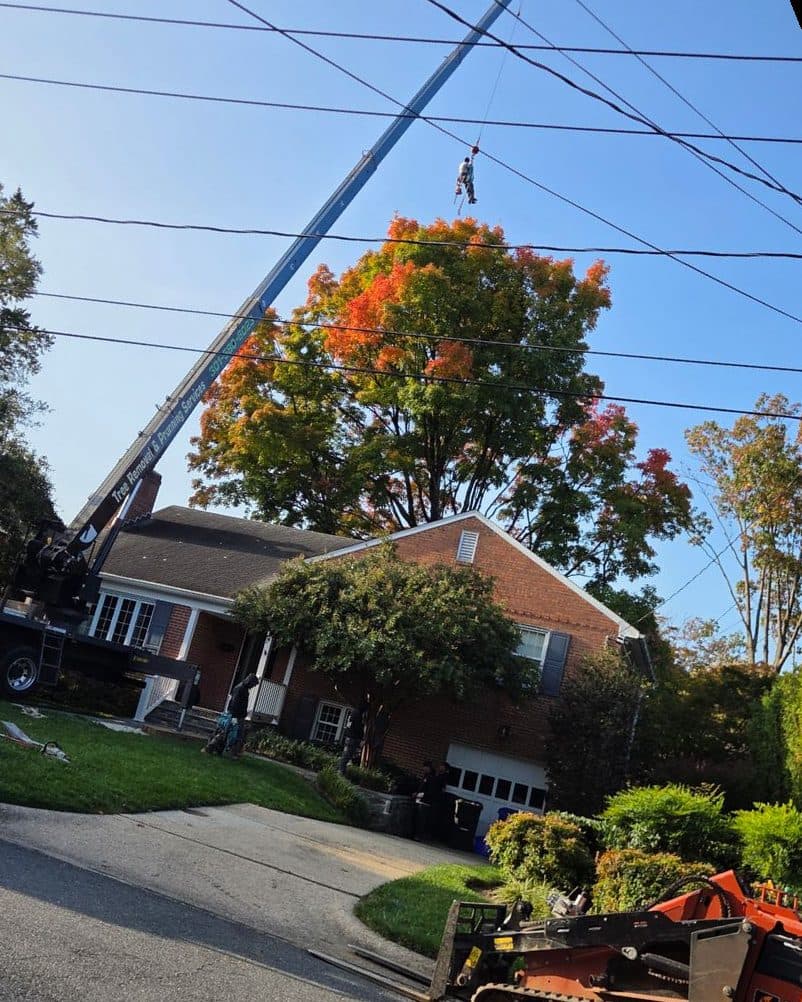
Smaller lifts meant more individual cuts, more rigging, and more repetition. The crew maintained that methodical pace until the tree was fully dismantled.
In addition to the six-man crew, our project manager was on site for most of the day, answering the homeowner’s questions and coordinating street parking with the neighbors.
Completing the removal and returning for the stump
The crew arrived at 7:30 a.m. By approximately 4:45 p.m., the tree had been removed, the debris was loaded into trucks, and the yard was cleaned. That allowed us to get the street open before the evening rush hour.
The stump required a separate visit. A smaller two-man crew returned the following day and spent approximately six hours completing the stump grinding.
A difficult decision after years of care
We understand that removing this red maple was not an easy decision for the homeowner after so many years of caring for it. However, the ground movement and broken deck railing, combined with the tree’s lean over the home, made proactive removal the responsible next step to reduce the risk of further property damage.
It is also why the annual inspection mattered. The change at the base of this tree happened between one visit and the next. A tree that is looked at every year gets caught at the point where the decision can still be made calmly, on a clear day with a crane booked, rather than after a storm has made it.
If you have concerns about a mature tree near your home
If you have concerns about a mature tree near your home, Rock Creek Tree, Turf & Landscape provides tree inspections, pruning, and crane-assisted tree removal in Bethesda and throughout the surrounding Montgomery County area. Send us photographs of the tree and what is around it, or request a quote, and we will tell you what we see.
Frequently asked questions
- The tree still looked healthy. Why did it have to come down?
- The canopy was healthy. The problem was at the base: the ground around the roots had started to move, and the trunk was pushing into the deck hard enough to break the railing. Ground movement means the roots are no longer holding the tree where it stands, and a tree leaning over a house cannot be allowed to keep moving. Nothing about the foliage changes that.
- What does ground movement around a tree mean?
- The soil on one side of the trunk lifts, cracks or mounds while the other side settles, which shows the root plate is rotating. Sometimes it follows a storm; sometimes it develops slowly as roots decay or soil stays saturated. Either way it is one of the few signs that point to the whole tree failing rather than a single limb, and it is worth a call the same week you notice it.
- Why was a crane needed instead of climbing the tree and lowering pieces on ropes?
- There was nowhere to lower them to. The deck wrapped around the trunk, the canopy was over the house, and the yard offered almost no room to land material. A crane lifts each section straight up and away from the roof and sets it down where the ground crew can reach it, which is the only way to take a tree like this apart without putting the house or the deck at risk.
- Why does it matter which crane is used?
- Reach is only useful if the truck can get close enough to use it. Here, high-voltage lines along the street, a new walkway and large plantings limited where anything could set up. A 22-ton rear-mount boom truck with a compact footprint could get into position where a larger crane could not. Owning several cranes of different sizes is what makes that choice possible.
- Why take the tree down in smaller pieces? Does that not take longer?
- It does take longer, and it is the right call when there is nowhere to put a large piece. Each lift had to land in a small area and be processed before the next one came down. More picks of a manageable size keep the crew working steadily; one oversized section would have stalled everything behind it.
- How many people does a crane removal like this take?
- Six on the tree: two climbers, a crane operator and three on the ground, plus a project manager on site for most of the day. One climber cut while the other handled the rigging, and the ground crew chipped, loaded and cleared between lifts.
- Why was the stump ground on a separate day?
- The removal itself filled the day. The crew arrived at 7:30 a.m. and the yard was clean by about 4:45 p.m., which let the street reopen before the evening rush. A two-man crew came back the following day with the grinder and spent about six hours on the stump.
- What about the power lines along the street?
- They decided where the crane could set up and how the boom could be swung. Keeping the required clearance from energized lines is non-negotiable, so the position of the truck and the path of every lift were planned around them before the first cut was made.