July 19, 2026
Montgomery County Weather This Week: Heat, Humidity & Afternoon Storms
Rockville and Montgomery County are in a classic mid-summer pattern this week — hot, humid days in the mid-80s to upper-90s with a real chance of afternoon and evening thunderstorms. Here's what that weather does to your trees and how to keep them safe.
Published by Rock Creek Tree, Turf & Landscape LLC — ISA Certified Arborists · Maryland Licensed Tree Expert #1944
Published July 19, 2026
If you live in Rockville or anywhere across Montgomery County, you already know the drill this time of year: sticky mornings, blazing afternoons, and that late-day rumble of thunder rolling in from the west. This week is shaping up to be a textbook Maryland mid-summer stretch — and while the forecast is mostly good news for backyard barbecues, it puts real stress on the trees around your home. Here's a look at the pattern we're in and, more importantly, what it means for your landscape.
This Week's Forecast at a Glance
After a round of strong storms moved through the region over the weekend, Montgomery County is settling into a warm, humid pattern for the week of July 19. Expect highs generally in the mid-80s early in the week, climbing toward the mid- and upper-90s as the week goes on, with overnight lows staying muggy in the upper-60s to low-70s. On the hottest afternoons, heat index values could push past 100°F. Skies will be a mix of sun and clouds, with the daily chance of pop-up showers and thunderstorms increasing later in the week.
- Early week: Partly cloudy, a touch less humid, highs in the mid-80s.
- Midweek: Building heat and humidity, highs in the low-to-mid 90s, isolated afternoon storms.
- Late week: Hot and humid with highs in the mid- to upper-90s and a higher chance of scattered — some possibly severe — thunderstorms.
- Overnight: Warm and muggy, lows in the upper-60s to low-70s.
It's the kind of week where the weather feels routine — right up until an afternoon storm with gusty winds blows through and reminds everyone how much stress our trees are carrying.
Why Summer Heat Is Hard on Maryland Trees
Extended heat and high humidity don't just make people miserable — they wear trees down too. When temperatures sit in the 90s for days at a time, trees lose moisture faster than their roots can pull it from the soil. You'll often see the warning signs: wilting or drooping leaves, scorched brown edges on foliage, early leaf drop, and a generally tired, thinning canopy. Newly planted trees and shallow-rooted species feel it first, but even large, established shade trees can slip into decline during a long hot spell.
Heat stress is also a quiet setup for bigger problems. A tree that's drought-stressed and weakened becomes far more vulnerable to boring insects, fungal disease, and — critically — storm damage. Weak, dehydrated wood snaps more easily when the wind picks up.
Watering Deeply Beats Watering Often
During a hot, dry stretch, the single best thing you can do for your trees is water them deeply and infrequently rather than with quick daily sprinkles. Let a hose run slowly at the base out to the drip line for a good soak, so moisture reaches the deeper roots. A two- to three-inch layer of mulch around the base (kept a few inches away from the trunk) helps hold that moisture in and keeps the root zone cooler. If you're not sure whether an older tree is struggling with the heat, our arborists can check its health and recommend a plan.
Afternoon Storms: The Real Summer Threat
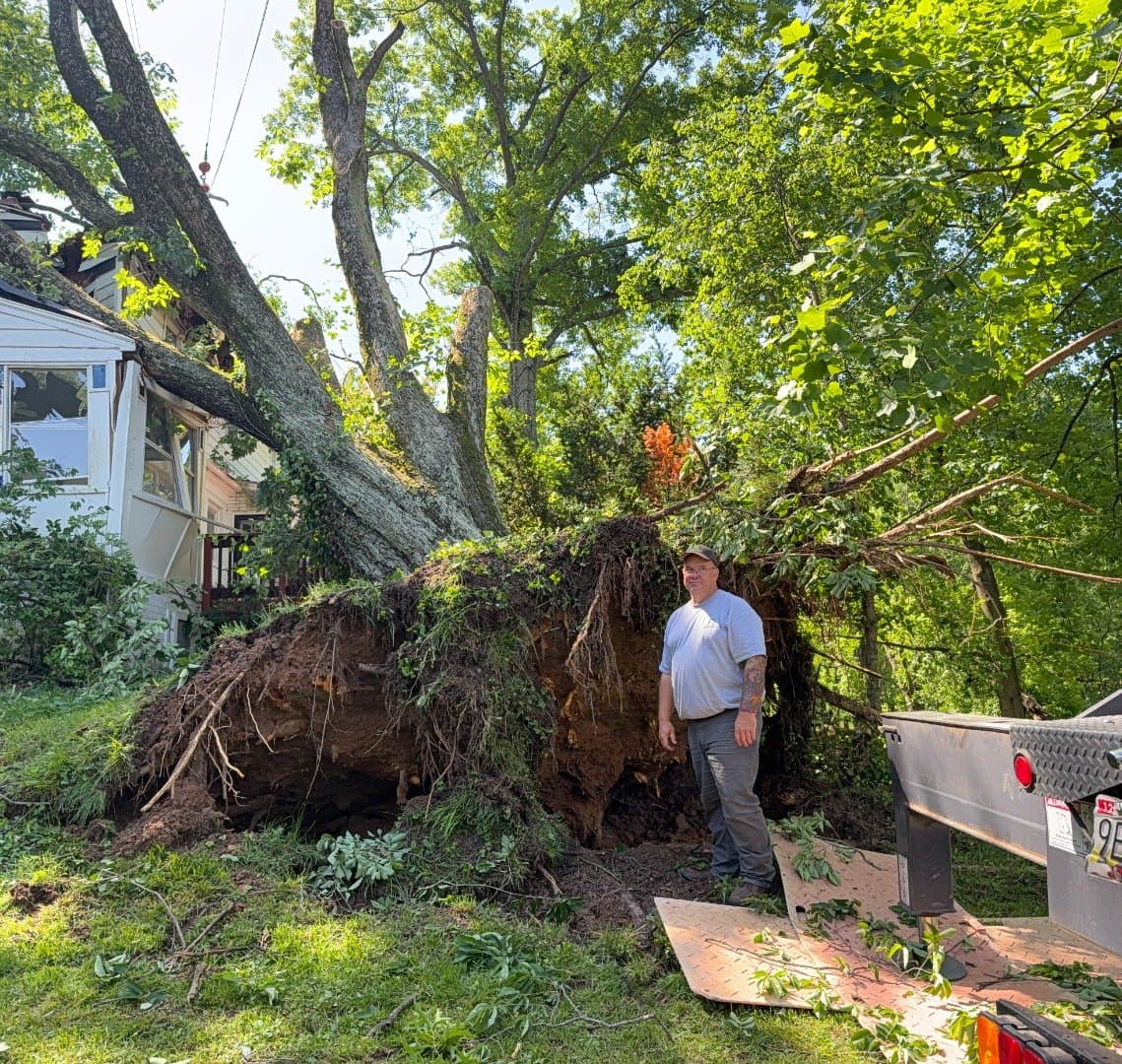
In Montgomery County, the more immediate danger this week isn't the heat itself — it's the pop-up thunderstorms that ride in on it. These storms can develop fast, and even a garden-variety summer cell can deliver 40-to-60 mph wind gusts, heavy downpours, frequent lightning, and occasional hail. That combination is exactly what brings limbs and whole trees down onto roofs, cars, fences, and power lines across the region every summer.
Trees already weakened by heat, previous storms, or hidden decay are the ones most likely to fail. Saturated ground after a heavy downpour makes matters worse — waterlogged soil loosens a tree's grip on the earth, which is why you'll sometimes see large trees uproot entirely in a storm that didn't seem all that severe.
Warning Signs Your Tree May Not Survive the Next Storm
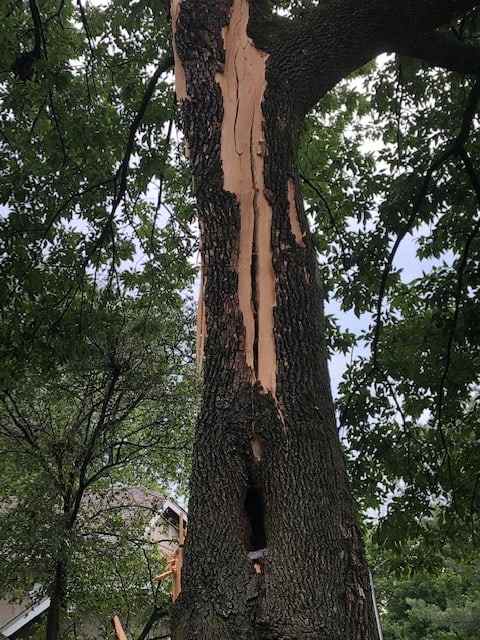
Before the next round of storms arrives, it's worth walking your property and looking for red flags. Catching a hazard early is far cheaper — and far safer — than dealing with the aftermath.
- Dead, hanging, or cracked limbs, especially over the house, driveway, or play areas.
- Large branches with no leaves while the rest of the tree is full.
- A visible lean that's new or getting worse.
- Cracks in the trunk, or soft, hollow, or peeling bark.
- Mushrooms or fungal growth at the base — often a sign of internal root rot.
- Soil heaving or cracking on one side of the trunk, which can signal loosening roots.
If you spot any of these, don't wait for a storm to make the decision for you. A proactive assessment — and, where needed, targeted pruning to remove weak or overextended limbs — dramatically lowers the odds of a failure.
How to Storm-Proof Your Trees Before the Next Round
- Schedule a professional inspection. An ISA Certified Arborist can spot structural weaknesses, decay, and disease that aren't obvious from the ground.
- Prune strategically. Removing dead wood and thinning dense canopies lets wind pass through instead of pushing against a sail of foliage.
- Water through the heat. Keeping trees hydrated helps them stay resilient rather than brittle.
- Remove trees that are already failing. If a tree is dead, severely leaning, or hollow, the safest move is often removal before it comes down on its own terms.
- Keep an eye on the sky. When storms are in the forecast, bring in loose outdoor items and stay clear of large trees during high winds.
If a Storm Does Bring a Tree Down
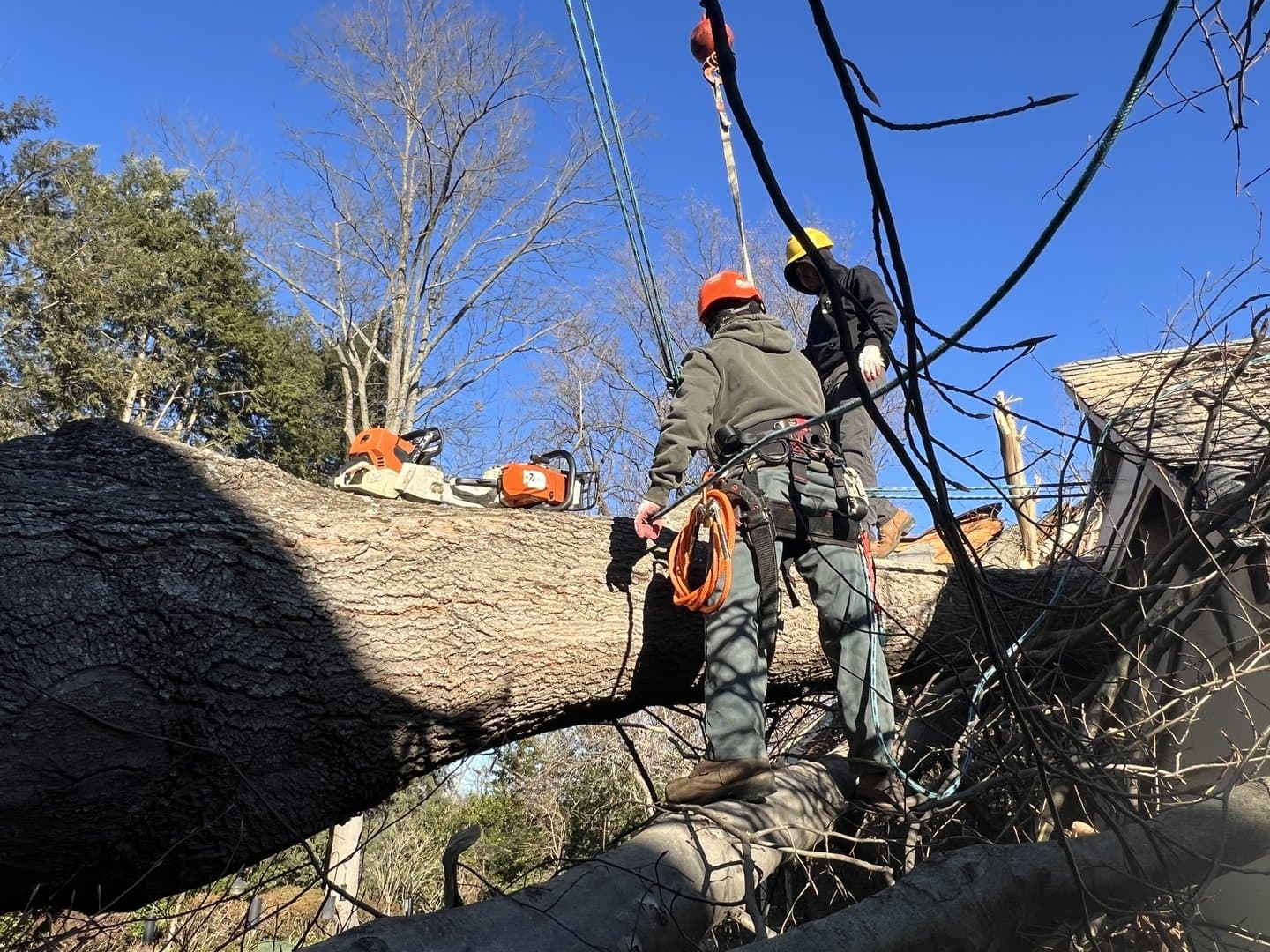
Summer storms in Maryland are unpredictable, and sometimes a tree fails no matter how well you've prepared. If that happens, safety comes first: stay well away from any tree or limb touching a power line, assume every downed line is live, and report it to your utility. Don't try to cut up a large fallen tree yourself — trees under tension can shift violently when cut, and a chainsaw in an untrained hand near a house or a line is a serious hazard.
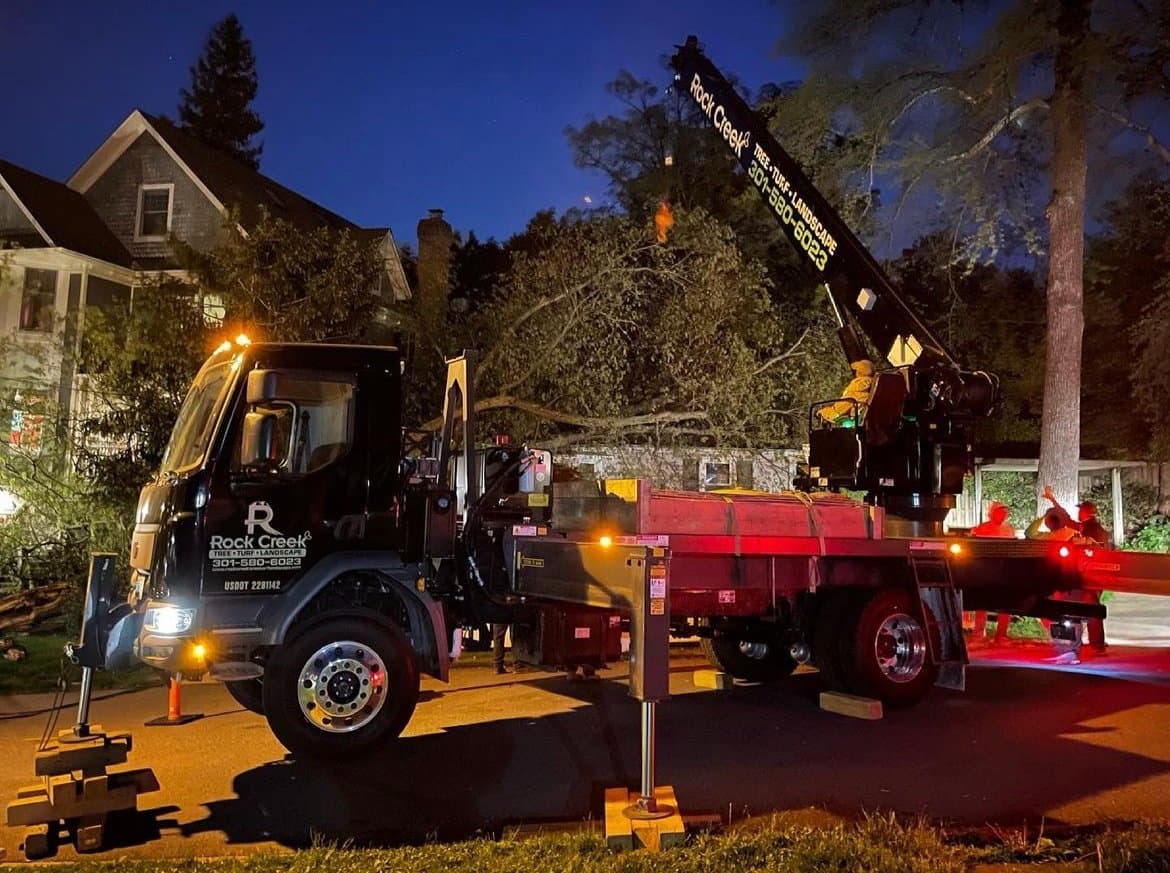
That's where we come in. Rock Creek Tree, Turf & Landscape provides emergency tree removal in Rockville and communities across Montgomery County, and storm cleanup is one of the things we do most in summer. If a storm this week leaves you with a fallen tree, a limb on the roof, a dangerous lean, or a yard full of debris, our crews can assess the damage, handle removals safely — including working around power lines — and get your property cleaned up.
Stay a Step Ahead of the Weather
Mid-summer in Montgomery County means heat, humidity, and storms — that's just Maryland in July. The trees that come through it best are the ones that are healthy, well-watered, and free of obvious hazards before the wind arrives. If you're not sure where your trees stand, the smartest time to find out is on a calm, sunny day — not in the middle of the next storm. Our ISA Certified Arborists are happy to take a look and give you an honest assessment.