July 28, 2025
Emergency Tree Removal – The Do’s and Don’ts
Learn what to do—and what to avoid—when a tree becomes a safety hazard. Expert tips for homeowners and how Rock Creek’s 24/7 crane-equipped crews can help
By John Ritz Miller, Jr. — ISA Certified Arborist MA-7241A, Rock Creek Tree, Turf & Landscape LLC
Published July 28, 2025 · Updated August 21, 2026
When a tree becomes a hazard—after a storm, unexpected lean, or structural failure—it’s crucial to act fast and smart. Here’s how homeowners can stay safe and minimize damage, and how Rock Creek’s experts can resolve emergency situations—even in the toughest conditions.
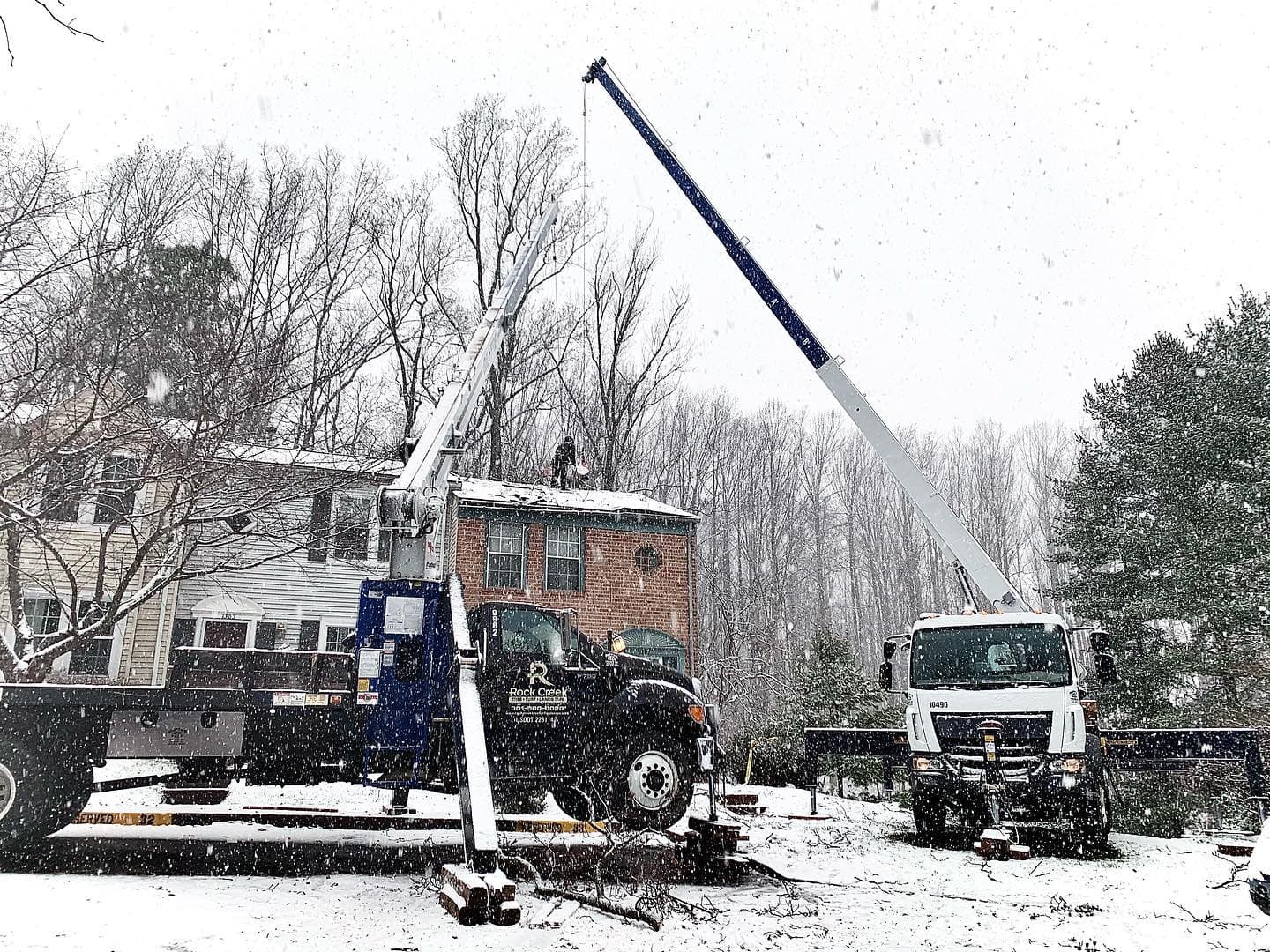
Do: Stay Safe & Assess the Situation
- Get everyone well clear of the tree and anything it is resting on
- Treat every downed line as live, and keep back — call the utility first
- Look up before you move: hanging limbs are the most common cause of injury after a storm
- Photograph the damage from a safe distance before anything is moved
- Call your insurer to open a claim, and call a licensed tree company for the removal
Don’t: Attempt DIY or Use Inadequate Tools
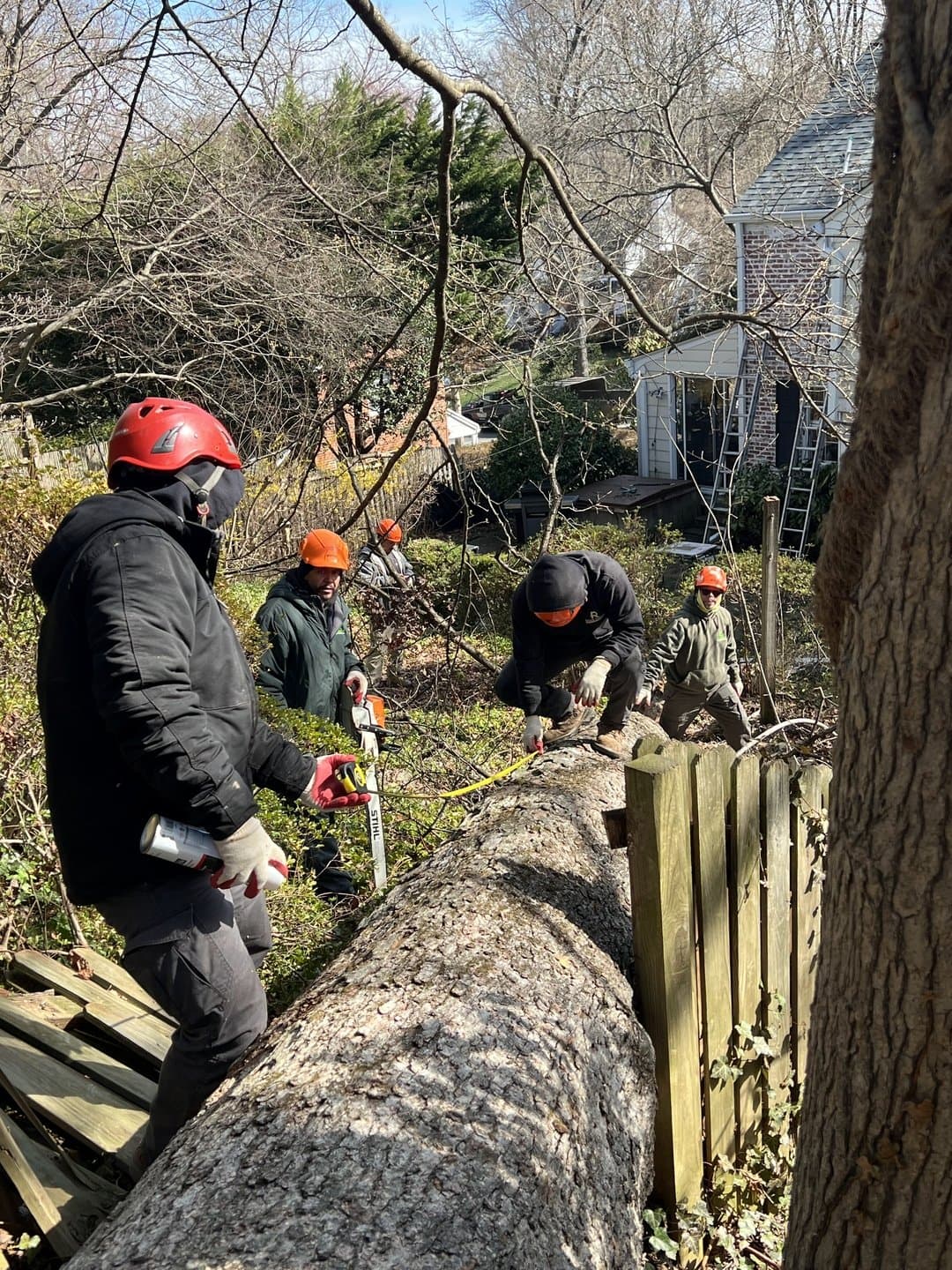
- A homeowner chainsaw is not the tool for storm-loaded wood
- Limbs under tension move violently and unpredictably when cut
- Ladders and chainsaws together account for a large share of serious injuries
- A tree resting on a structure may be holding that structure up
- Damage you cause yourself may not be covered by your policy
Don’t: Wait Too Long to Act
- Damaged trees keep moving — a lean and a partial root failure both worsen
- Rain on already saturated ground brings down trees that survived the first storm
- An opening in the roof gets more expensive every hour it stays open
- Hanging limbs can drop without warning, in still air
- Insurers expect damage to be mitigated promptly once it is safe to do so
The longer you wait, the more dangerous—and expensive—the situation can become. Always act quickly when you spot a hazardous tree. We also recommend photographing damage for insurance or emergency service documentation.
Do: Call Rock Creek’s 24/7 Emergency Team
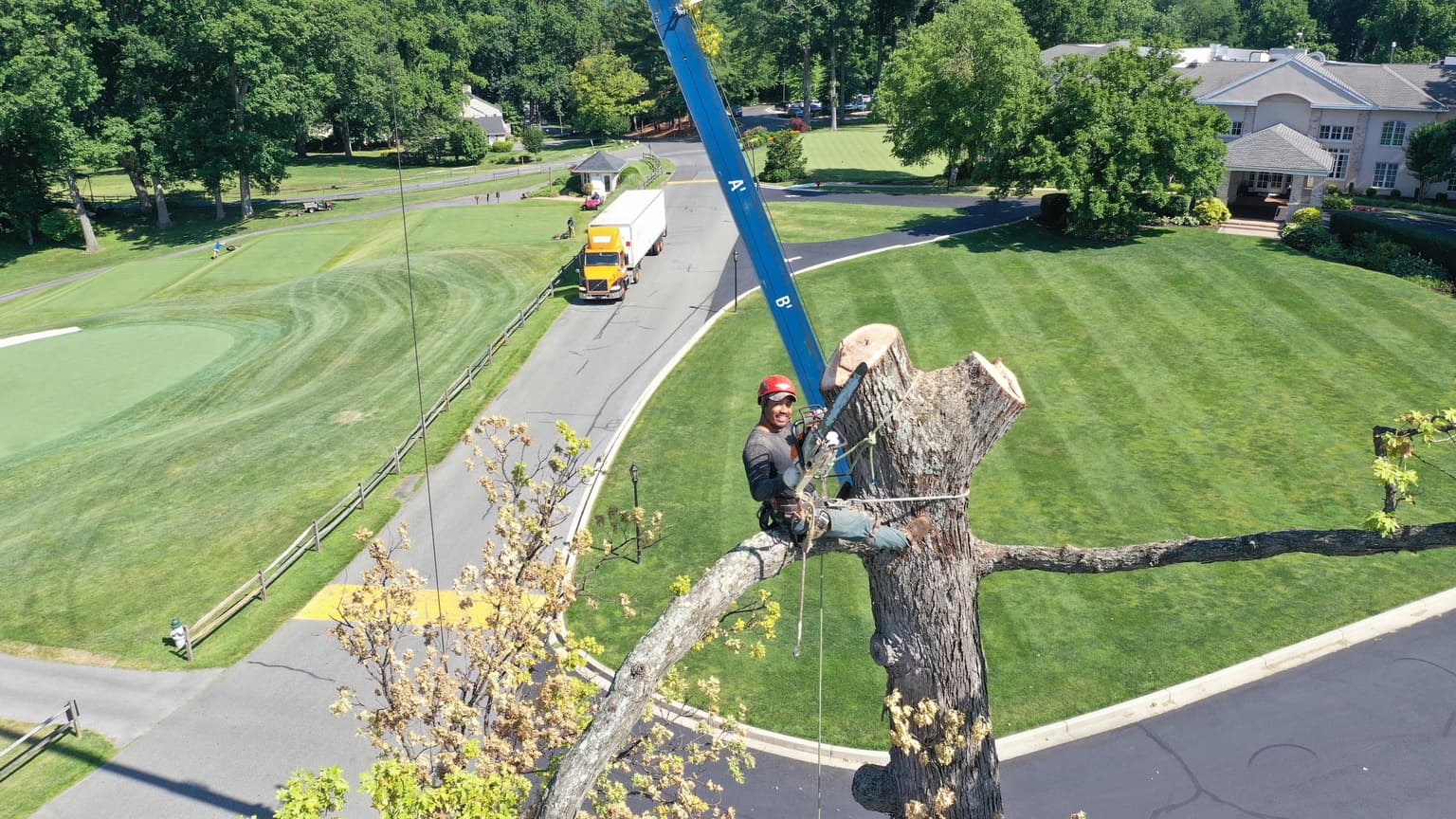
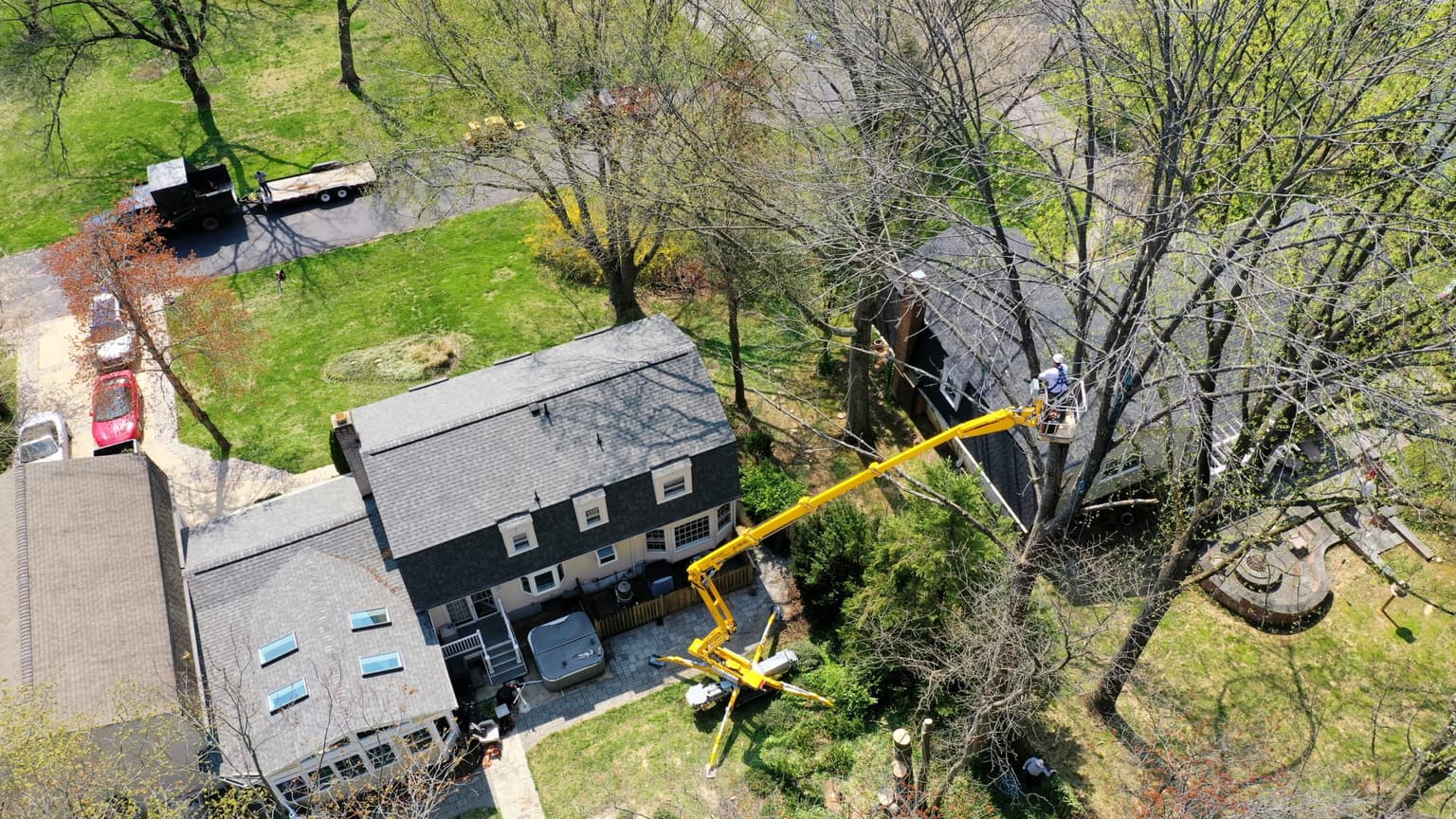
Rock Creek provides around-the-clock emergency crane-equipped tree removal , ready for any scenario—storm damage, hung-up trees, or high-risk removals.
- Trees down on houses, garages and outbuildings
- Trees blocking driveways and roads
- Partially uprooted and leaning trees
- Hanging limbs suspended in the canopy
- Storm damage involving more than one property
Do: Follow Up with Regular Tree Care
Once the emergency subsides:
- Have the remaining trees inspected — the one that fell is rarely the only one affected
- Check for new leans, lifted soil and cracks at the base
- Remove hanging and broken limbs left in neighboring canopies
- Plan restorative pruning for trees that can be saved
- Keep the photographs and invoices together for your claim
Why Rock Creek?
- Around-the-clock emergency response
- ISA Certified Arborists and Maryland Licensed Tree Experts on staff
- Cranes and specialist access equipment owned in-house
- Full documentation of the work for your insurer
- Licensed and insured in Maryland and Virginia
Conclusion
Do prioritize safety, assess the hazard, document carefully, and call professionals. Don’t attempt risky DIY work, ignore danger signs, or delay. When every minute counts, trust Rock Creek’s skilled, crane-equipped team to remove trees safely and restore your property.
Need Immediate Help?
Call Rock Creek Tree, Turf & Landscape now at (301) 580‑6023 for rapid, reliable emergency tree removal—anytime, any weather—and get a free estimate.