July 4, 2026
How to Spot a Hazardous Tree Before the Next Summer Storm
July is peak storm season in Maryland. Here's how Rockville and Montgomery County homeowners can spot a dangerous tree before high winds bring it down — plus what to do if you find one.
By John Ritz Miller, Jr. — ISA Certified Arborist MA-7241A, Rock Creek Tree, Turf & Landscape LLC
Published July 4, 2026 · Updated August 21, 2026
Fourth of July weekend in Montgomery County usually means cookouts, fireworks, and — this being Maryland in July — the very real chance of a fast-moving thunderstorm rolling through. Summer storms here can spin up quickly, and the damaging winds that come with them are exactly what bring weak or compromised trees down onto roofs, cars, and power lines.
The good news: most trees that fail in a storm were showing warning signs long before the wind arrived. If you know what to look for, you can catch a hazard tree in your own yard before it becomes an emergency. Here's a homeowner's guide to spotting the trouble early.
Why Summer Storms Are So Hard on Trees
It doesn't take a tornado to drop a tree. Arborists note that once sustained winds climb past roughly 20 to 30 mph, weakened trees start to fail more often, and late-summer storms tend to be the most damaging of the year because trees are in full leaf and catch far more wind.
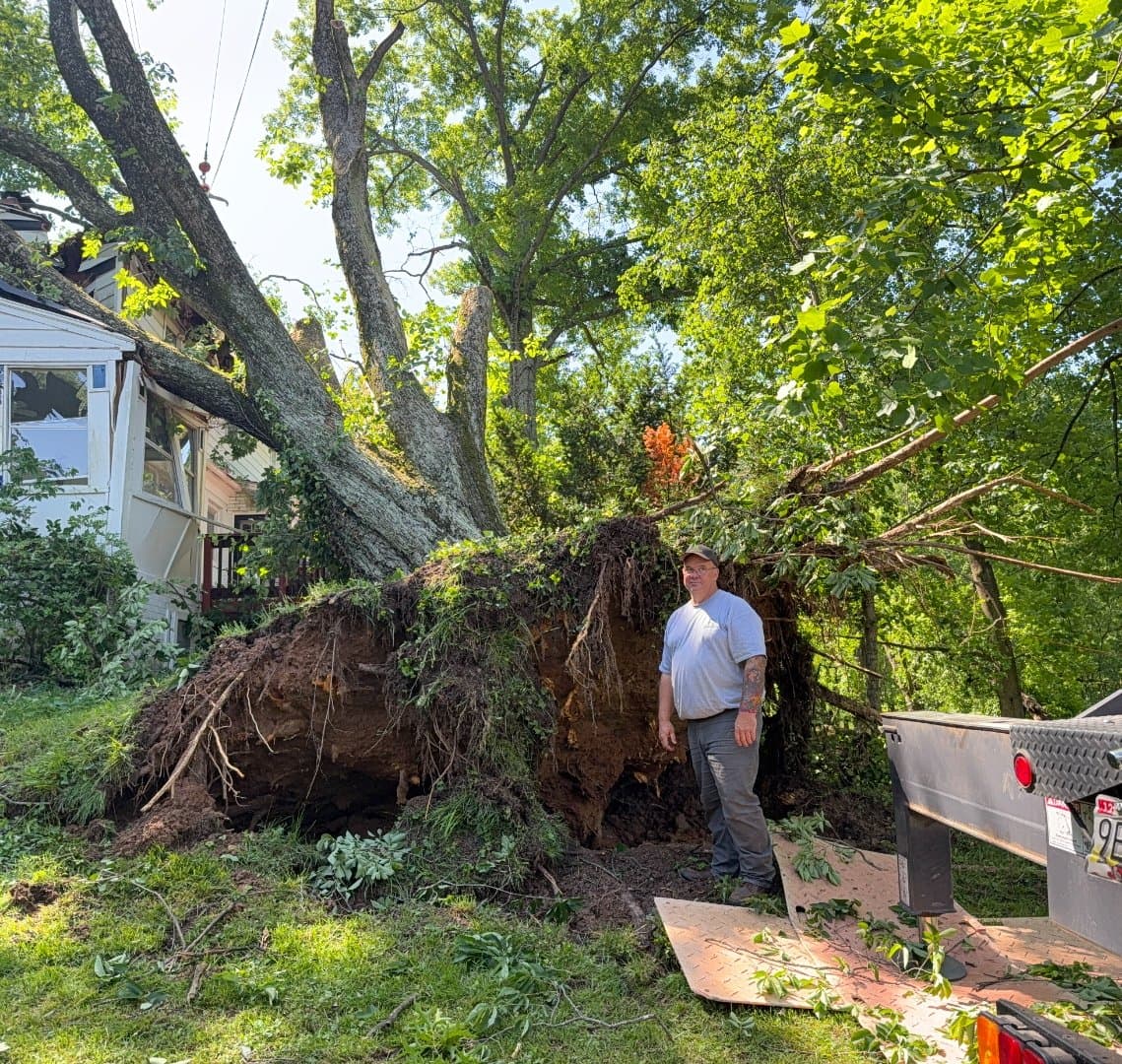
Maryland sees this play out every summer. Severe thunderstorms across the region regularly snap trunks and uproot trees — a single storm survey in Southern Maryland in July 2025 documented roughly ten trees uprooted and ten more with their tops snapped along just a couple of roads. A tree that's already leaning, decayed, or root-damaged is the first to go when a storm like that hits.
7 Warning Signs Your Tree May Be a Storm Hazard
1. A new or worsening lean
A tree that has always grown at a slight angle is usually fine. A tree that has recently started leaning — or is leaning more than it used to — is a red flag. It often signals that roots on one side are failing. Look for soil that's cracked, heaved, or mounded on the side opposite the lean; that's the root plate beginning to lift.
2. Dead branches and bare limbs
Large limbs with no leaves in the middle of summer are dead, and dead wood is brittle. These branches are the first thing to break and fall in high wind. A canopy that's thinning, or a whole section of the tree that leafed out late or not at all, tells you part of the tree is dying back.
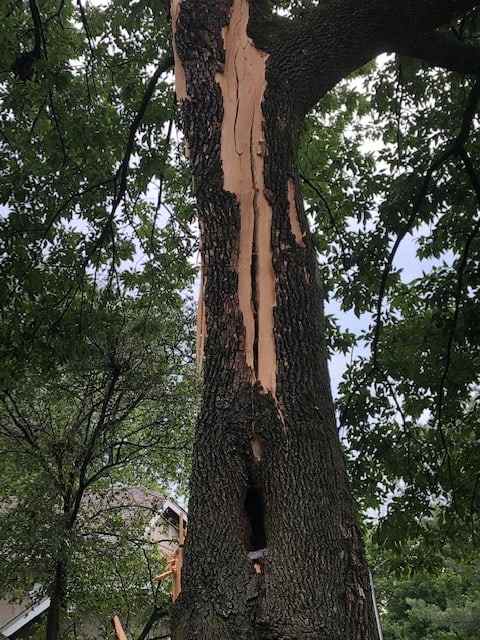
3. Cracks or splits in the trunk
Deep vertical cracks, seams, or a trunk that appears to be splitting are serious structural problems. So are trees with two or more main stems that press against each other where they join — that union can pull apart under load, taking half the tree with it.
4. Cavities, soft spots, and fungus
Open cavities, hollow-sounding wood, peeling bark, or mushrooms and shelf fungus growing on the trunk or at the base all point to internal decay. A tree can look full and green on top while being rotten and structurally weak inside.
5. Exposed or damaged roots
Roots anchor the whole tree. If you can see lifted, cut, or decayed roots — or if recent construction, trenching, or heavy vehicles have compacted or disturbed the soil near the base — the tree's grip on the ground may be weaker than it looks.
6. Trees growing into power lines
Limbs touching or reaching into utility lines are dangerous in any storm. Never try to prune these yourself — it's a job for professionals coordinating with the utility. Note the location and keep everyone away from it.
7. Heavy vines and past storm damage
Thick English ivy or other vines can hide defects and add wind resistance, and a tree that lost a major limb in a previous storm often has hidden weakness where that limb tore away. Both deserve a closer look before the next round of weather.
A Quick 10-Minute Yard Walk
You don't need to be an arborist to do a first pass. Walk your property and check each significant tree for these, from the ground up:
- The base: cracked or heaving soil, exposed roots, mushrooms or fungus
- The trunk: cracks, splits, cavities, soft or peeling bark
- The union: any point where two main stems meet and press together
- The canopy: dead limbs, bare branches, thinning or one-sided growth
- The surroundings: lines the tree could hit — house, driveway, power lines, the neighbor's yard
If a tree checks several of these boxes, or if any single sign looks severe, don't wait for the next storm to make the decision for you.
Found a Problem? Here's What to Do
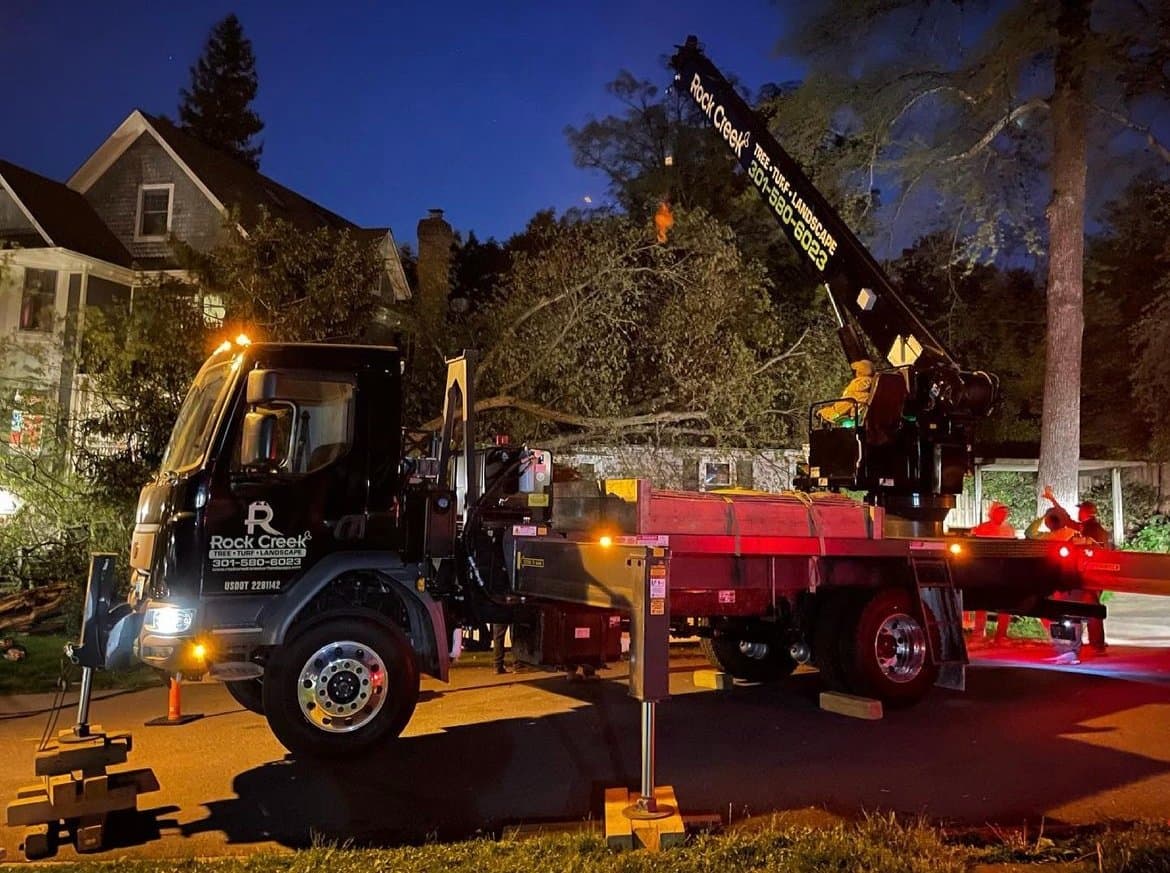
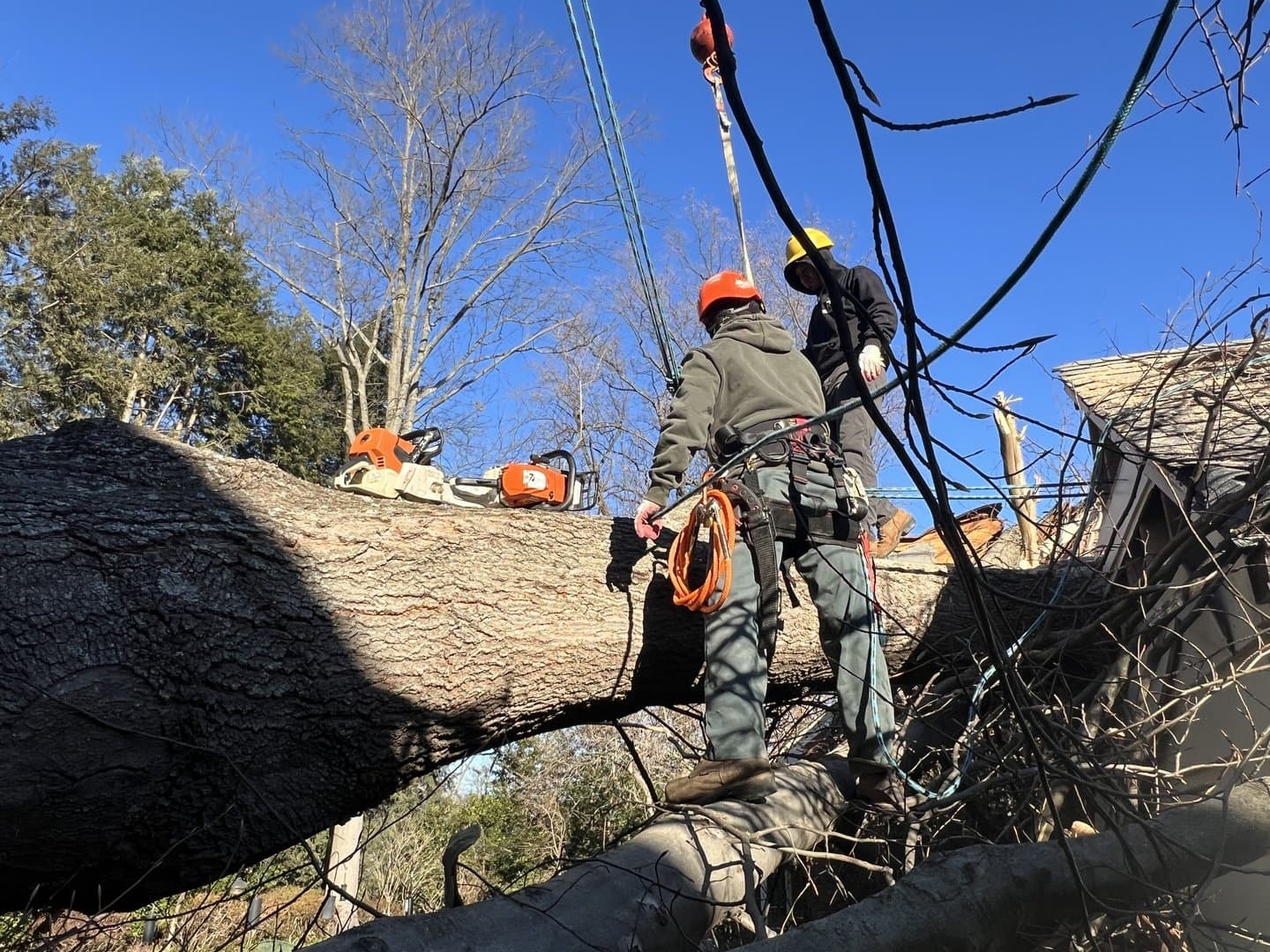
If the tree is actively down, on a structure, or tangled in power lines, treat it as an emergency: keep people away, call 911 if lines or gas are involved, and call for emergency tree service. Do not attempt to cut a tree that's under tension or resting on a building yourself — that's how serious injuries happen.
If the tree is still standing but showing warning signs, the smart move is a professional assessment before the next storm. A certified arborist can tell the difference between a cosmetic flaw and a genuine failure risk, and often the fix is targeted pruning rather than removing the whole tree.
Get Ahead of Storm Season in Rockville and Montgomery County
Rock Creek Tree, Turf & Landscape serves Rockville and communities across Montgomery County, and summer is our busiest season for exactly this reason. If a tree on your property has you second-guessing, we'll come take a look, give you a straight answer about the risk, and handle whatever it needs — from a single hazard limb to full removal, storm cleanup, and emergency response when the weather doesn't cooperate.
Have a tree you're worried about heading into the holiday weekend? Reach out for an assessment and go into storm season with one less thing to worry about.