June 20, 2026
Mature Tree Care in Rockville, Potomac & Bethesda: What Homeowners Should Know
Have large or older trees on your property? Learn when Rockville, Potomac, Bethesda, and Chevy Chase homeowners should schedule pruning, tree removal, stump grinding, or an arborist inspection.
Mature trees are one of the best parts of living in established Montgomery County neighborhoods. They provide shade, privacy, beauty, and curb appeal. In many cases, they are part of what makes a property feel established and valuable.
But large trees also need proper care.
Older trees can develop dead limbs, weak branch connections, root problems, decay, pest activity, or storm damage that may not be obvious from the ground. A tree may look healthy at first glance while still creating risk near a home, driveway, patio, fence, or utility line.
For homeowners in established areas of Rockville, Potomac, Bethesda, and Chevy Chase, regular tree maintenance is an important part of protecting both the property and the landscape.
Why mature trees need a different level of care
A young ornamental tree and a 70-foot oak near a home are not the same kind of project.
Mature trees are heavier, taller, and more complex. Their branches may extend over roofs, garages, walkways, play areas, and neighboring properties. Their root systems may be close to driveways, patios, retaining walls, or underground utilities.
That is why mature tree care should be handled carefully and professionally. The goal is not simply to “cut branches.” The goal is to understand the tree’s structure, health, location, and risk before recommending pruning, treatment, monitoring, or removal.
Good tree care can help:
- Reduce the chance of falling limbs
- Protect roofs, gutters, siding, decks, fences, and vehicles
- Improve clearance around the home and driveway
- Help preserve healthy mature trees
- Identify hazardous trees before severe weather
- Improve sunlight and airflow through the yard
- Maintain the look and value of the property
In many cases, the right pruning plan can help keep a mature tree healthy and safe for years. In other cases, removal may be the responsible choice.
Established neighborhoods with mature tree canopies
Not every neighborhood has the same tree-care needs.
Newer planned communities often have beautiful landscaping, but many of the trees are still relatively young. Mature-tree service is usually more important in older neighborhoods with larger lots, older homes, and established canopy.
In Rockville and nearby Montgomery County, mature tree care is especially relevant in areas such as:
West End and Woodley Gardens
These neighborhoods include older homes, established lots, and mature landscaping. Homeowners often need pruning, deadwood removal, inspections, and tree preservation work.
College Gardens and Woodley Gardens
With mature residential streets, generous setbacks, and large shade trees, these areas often require careful pruning around homes, sidewalks, and driveways.
Rockshire and Fallsmead
These west Rockville neighborhoods have larger lots, wooded edges, parks, and mature trees. Storm cleanup, large-limb removal, stump grinding, and full tree removal are common needs.
Horizon Hill, Potomac Woods, Glen Hills, and Fallswood
These neighborhoods often have larger yards, older trees, and a more wooded feel. Tree work in these areas may require extra care around homes, fences, patios, and neighboring properties.
Potomac, Bethesda, and Chevy Chase
Many homes in these communities sit on valuable lots with mature trees that contribute heavily to curb appeal. Proper pruning and inspection can help preserve those trees while reducing risk to the home.
Signs your tree should be inspected
You do not need to wait until a tree becomes an emergency. Many tree problems can be spotted early with a professional inspection.
A homeowner should call a tree professional if they notice:
- Dead branches in the upper canopy
- Large limbs hanging over the roof, driveway, or patio
- Cracks in the trunk or major limbs
- Mushrooms or fungal growth near the base of the tree
- Bark peeling, splitting, or missing in large areas
- A sudden lean or a tree that seems to be shifting
- Roots lifting soil, pavement, or hardscape areas
- Sparse leaves, thinning canopy, or early leaf drop
- Woodpecker activity or visible insect damage
- Branches touching the house, garage, or utility lines
These signs do not always mean the tree needs to be removed. They do mean the tree should be looked at by someone qualified to assess tree health and structural risk.
Should the tree be pruned or removed?
This is one of the most common questions homeowners ask.
The answer depends on the tree.
If the tree is healthy enough and structurally sound, pruning may be the best option. Proper pruning can remove deadwood, reduce weight on weak limbs, improve clearance, and help the tree handle storms better.
Tree removal may be recommended when the tree is dead, severely decayed, unstable, badly damaged, leaning toward a structure, or located in a place where it creates ongoing safety concerns.
A good tree company should not automatically recommend removal for every problem. In many cases, preservation is possible. But when a tree presents a real risk, removal may be the safest and most responsible solution.
Why proper pruning matters
Pruning mature trees is not the same as trimming shrubs.
Poor pruning can weaken a tree, expose it to decay, or create new growth problems. Removing too much canopy at once can also stress the tree and make it more vulnerable.
Professional pruning focuses on the right cuts for the right reasons. That may include removing dead limbs, reducing end-weight, improving structure, clearing branches from the roof, or opening the canopy without damaging the tree’s natural shape.
For mature trees, less is often more. The goal is to make the tree safer and healthier, not simply smaller.
When crane-assisted tree removal may be needed
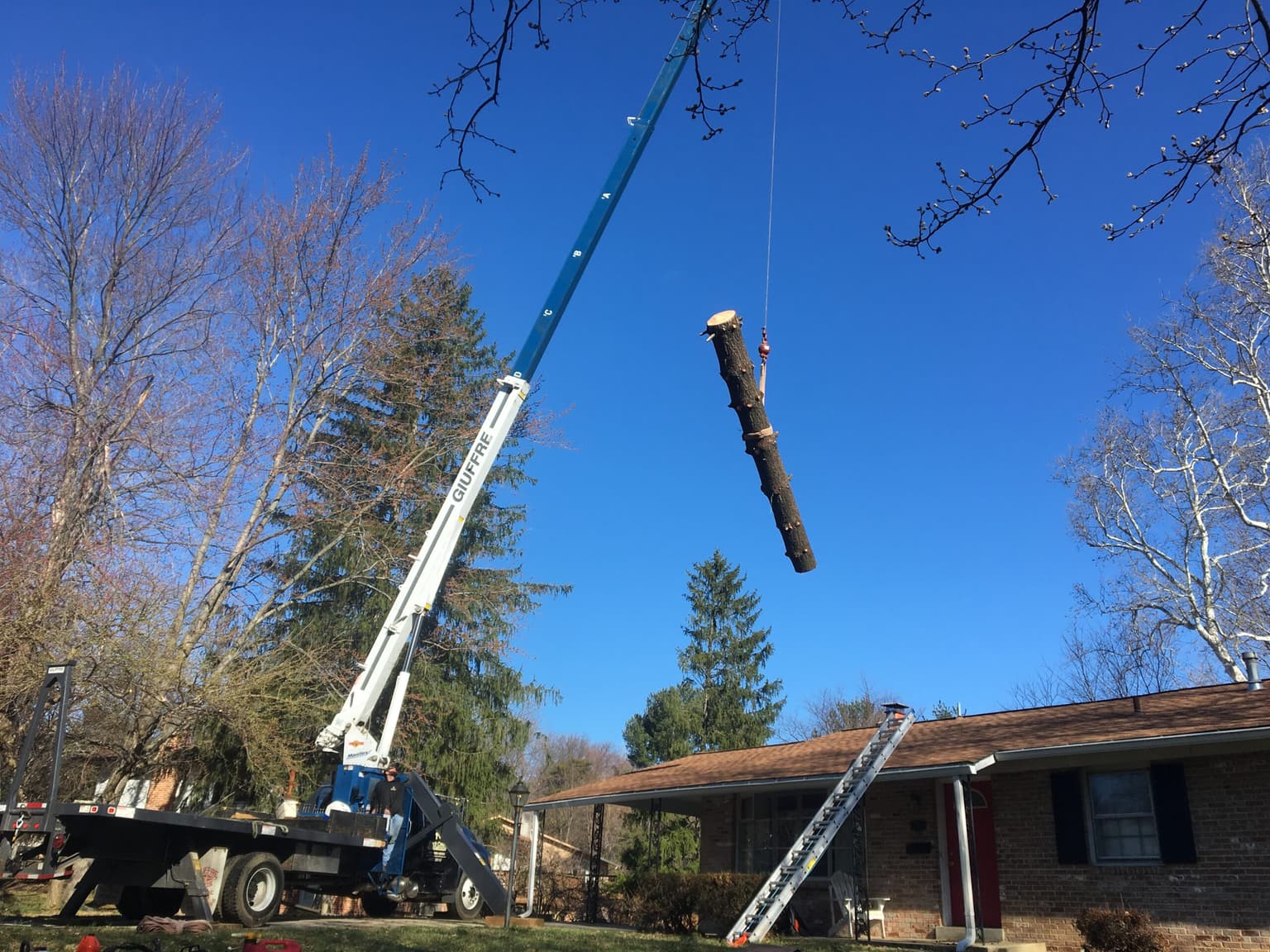
Some trees are too large or too close to structures for a simple removal. In those cases, crane-assisted tree removal may be the safest option.
A crane may be helpful when a tree is near:
- A house or garage
- A pool, patio, or deck
- A fence or retaining wall
- A narrow driveway
- A neighboring property
- Valuable landscaping
- A steep or wooded area
Using the right equipment can help reduce damage to the surrounding property and make complex removals safer and more controlled.
Stump grinding after tree removal
Once a tree is removed, the stump is often the next issue.
Old stumps can attract insects, interfere with mowing, create trip hazards, and make a yard look unfinished. Stump grinding removes the visible stump and allows the area to be restored with grass, mulch, planting beds, or new landscaping.
For homeowners preparing to sell, renovate, or improve curb appeal, stump grinding is usually worth including in the project.
Hire a properly qualified Maryland tree professional
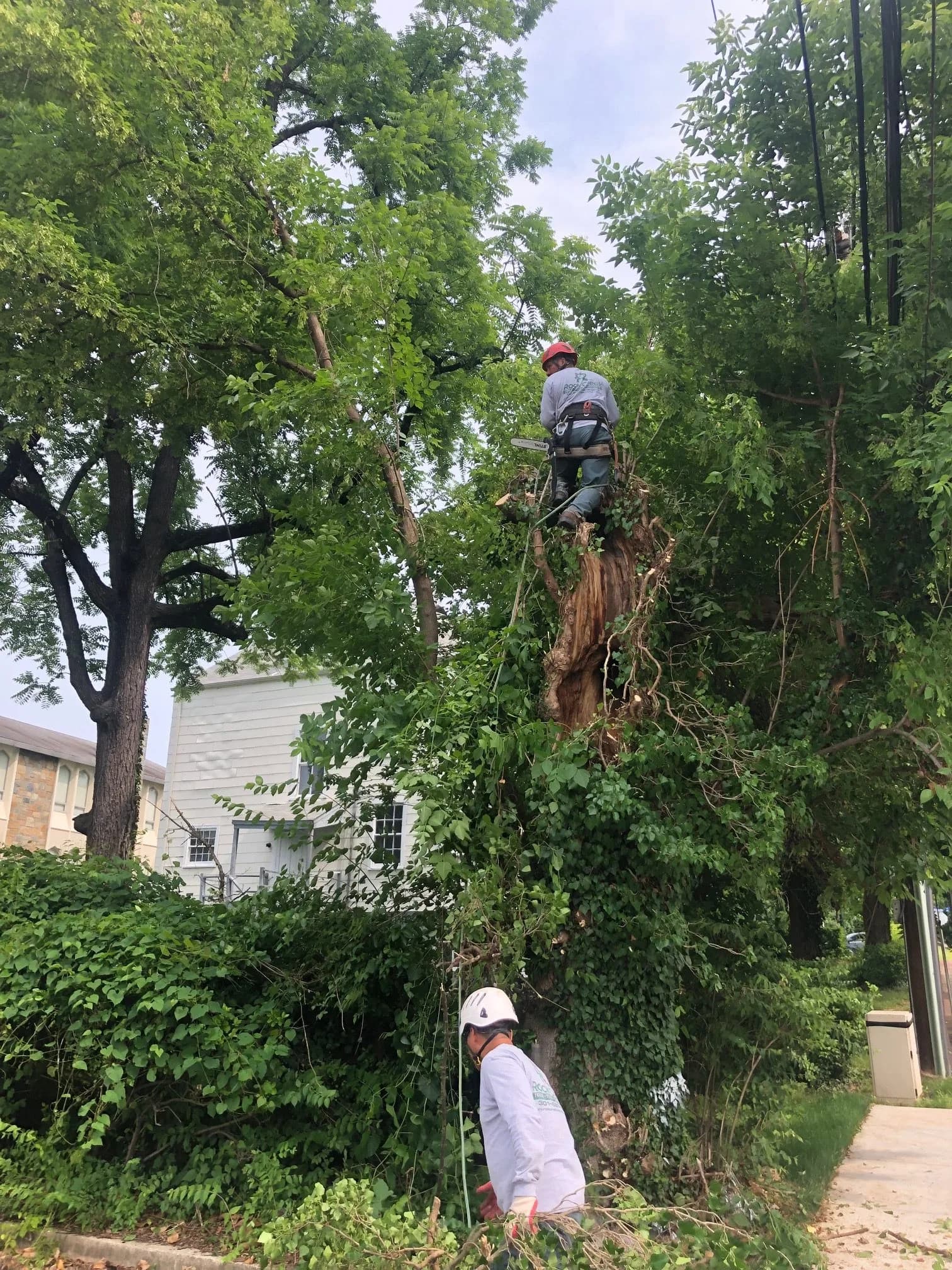
Tree work is dangerous, especially when it involves large trees, storm damage, climbing, rigging, chainsaws, cranes, or work near structures.
In Maryland, tree care professionals must be licensed to practice or advertise tree care services. The Maryland Department of Natural Resources provides a Licensed Tree Expert search tool, and the University of Maryland Extension recommends that homeowners verify credentials before hiring anyone for tree trimming, damaged-tree removal, or downed-tree work.
Homeowners should look for a company that is licensed, insured, experienced with mature trees, and able to explain the reason behind its recommendations.
Local mature tree care in Montgomery County
Rock Creek Tree, Turf & Landscape provides mature tree care, tree pruning, tree removal, stump grinding, crane services, emergency tree service, tree planting, feeding, and insect control throughout Rockville, Potomac, Bethesda, Chevy Chase, Kensington, and surrounding Montgomery County communities.
If you have a large tree near your home, driveway, patio, fence, or property line, a professional inspection can help you understand your options before the next storm.
Schedule a free on-site estimate with Rock Creek Tree, Turf & Landscape.
Frequently Asked Questions
How do I know if a mature tree is dangerous?
Warning signs include dead limbs, cracks, fungal growth, sudden leaning, root movement, thinning leaves, or large branches hanging over a home, driveway, or patio. A professional inspection is the safest way to understand the risk.
Does a mature tree always need to be removed if it has dead branches?
No. Many mature trees can be preserved with proper pruning. Removal is usually recommended when the tree is dead, severely decayed, unstable, or creating a serious safety concern.
How often should large trees be inspected?
Large trees near homes, driveways, patios, or play areas should generally be inspected once a year and after major storms.
What is the difference between pruning and topping?
Pruning removes specific branches for health, safety, clearance, or structure. Topping cuts back large portions of the canopy and can seriously damage the tree. A qualified tree professional should avoid unnecessary topping.
When is crane removal needed?
Crane-assisted removal may be needed when a large tree is close to a home, garage, pool, fence, steep slope, or other area where a controlled removal is safer.
Should I grind the stump after tree removal?
In most cases, yes. Stump grinding improves the appearance of the yard, removes a trip hazard, helps prevent pest issues, and makes the area easier to landscape.
Do Maryland tree companies need to be licensed?
Yes. Maryland requires tree care professionals to be licensed to practice or advertise tree care services. Homeowners should verify that the company has proper Maryland credentials and insurance before hiring.